The Notes
Creative conversations with Artists, Designers & Dreamers.
People of Progress Founder Hannah Holmes
If you had the chance to wrap yourself in time, where would you go? How long would you stay? Our hands carry memories. Caress dreams. Embody the past. Cradle the future. When it comes to what we wear, how can we unravel the power of seeing our clothes as second skin? For People of Progress, the art of creation lies not in seeking excellence. It grows in conversation with nature, breathes in unison with the ocean & is born again as we surrender the ego.
It’s the year of the horse, how does that feeling of running free translate into your creative energy?
I believe it means less introspection. The journey of me finding more safety in my relationship with self when creating as opposed to the imposter within taking a seat in the process. Asking myself often, is this truly coming from the heart. Running free as an artisan is to accept that what we put out into the world will not resonate with everyone, just to those that it is meant too. I think that is a beautiful thing.
As designers, what colour does the future look like for People of Progress?
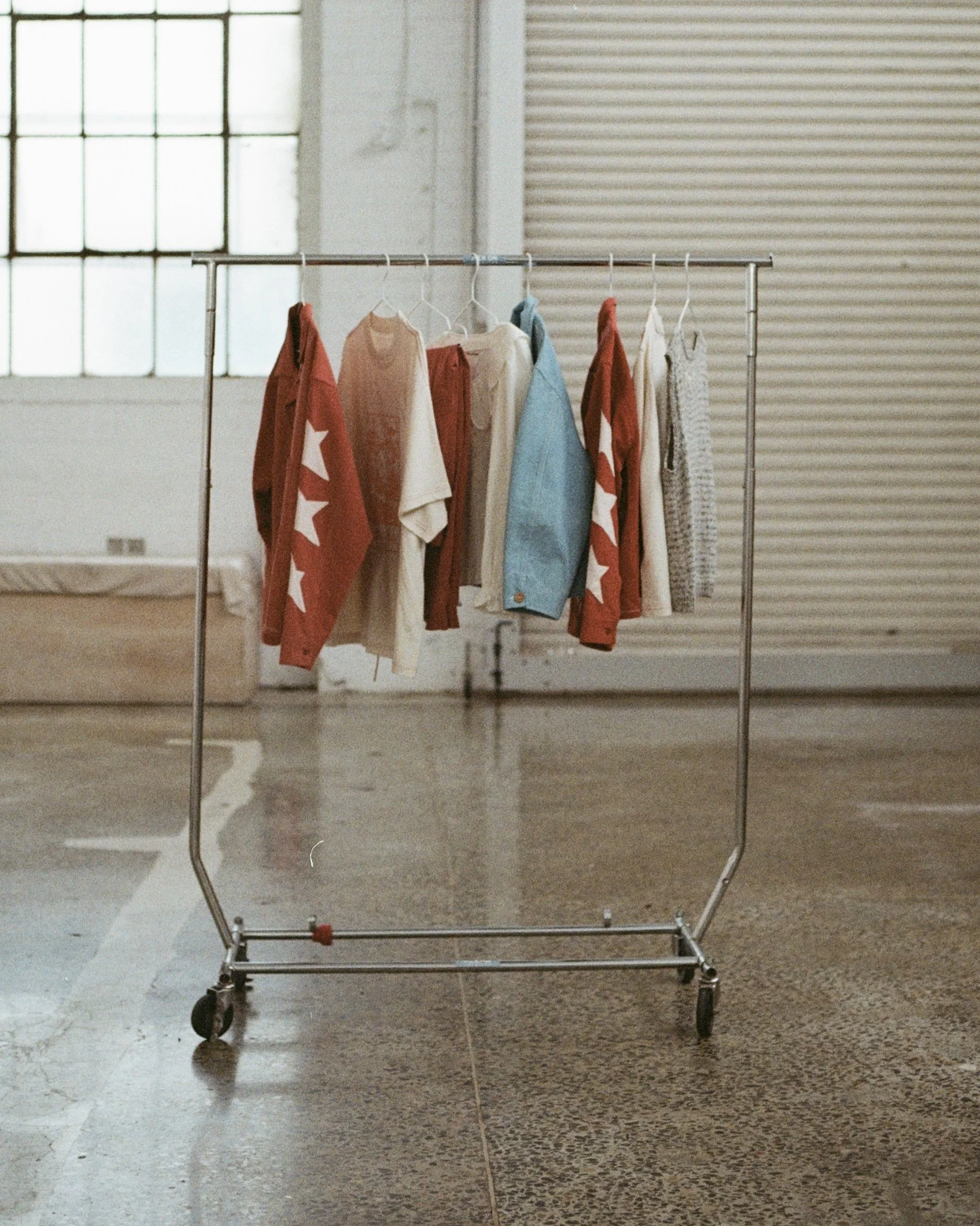
We have not yet played enough with Indigo and it is the mother of all natural dyes… So more Indigo!
As People of Progress, is there anything that stands in your way?
Where do I begin — fuel prices, perhaps? But in all seriousness, the greatest obstacle we face is the current terrain of the fashion industry itself. There is an overwhelming cultural emphasis on efficiency and more — more product, more speed, more consumption — and I believe most consumers are blind to the cost that these values quietly exact. It lives in overflowing landfills, in polluted waterways, in the hands of garment workers who are paid wages no human being should be asked to survive on.
The industry has normalised the extraordinary — that a dress can cost less than a coffee, that trends can die before they're even worn. When disposability becomes the standard, it becomes near impossible to communicate the worth of something made with intention. That is the tension we navigate constantly: trying to hold space for slow, considered design in an environment that has been engineered for the opposite. It is not simply a market challenge — it is a cultural one. And shifting culture is slow work. But then again, so is everything worth doing.
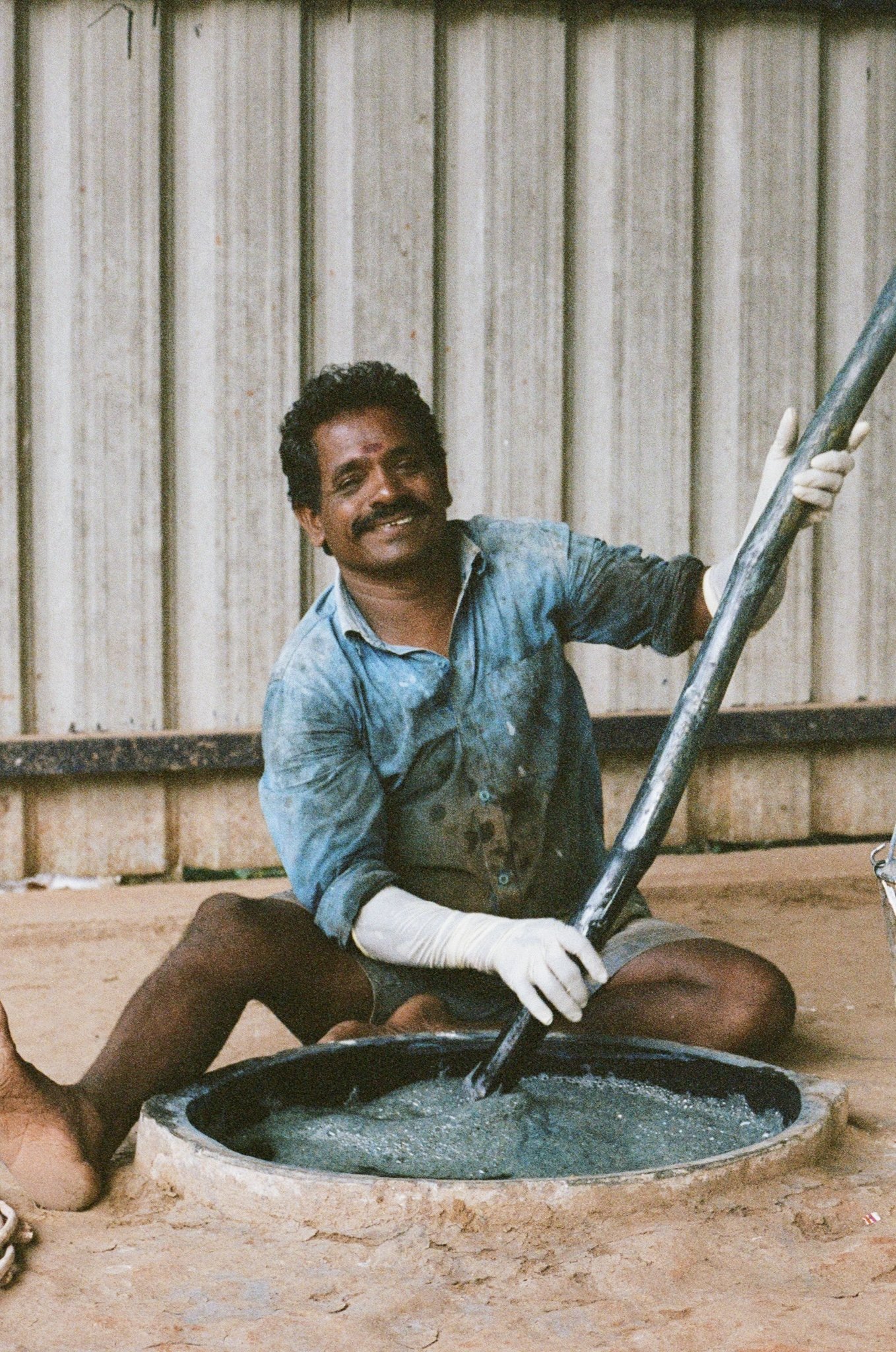
What is the most profound philosophy from your Indian makers that has become the rhythm of your own life?
Our makers have never had to seek excellence. They simply know no other way. And I believe this excellence has a source. It is not born from competition or individual mastery, but from something older and quieter. A knowledge that was never meant to be owned, only passed down. Handed from one generation to the next like a song, it deepens precisely because it is shared — in the sitting beside, in the watching and the doing, in the conversation that happens while the hands are working. This is what makes the craft extraordinary. Not the protecting of a skill, but the giving of it away. This ethos undoes me, because I have never known an ecosystem that is not, at its core, egocentric. I have never known creativity that did not seem to demand recognition. I grapple with the idea of anonymity and art, for the two can feel mutually exclusive. In a society built on praise, we have lost the capacity to appreciate the creation separate from the ego of its creator. I long to discover experience of humility and contentment that our Indian makers live so freely within.
In a world of disposable fashion, your garments hold a deep, slow history. When someone wears your designs, what feeling do you want them to carry forward into the future?
It is some sort of resonant experience of acting with intention. I've been on my own transformational journey with this: moving away from reactive consumption toward a more considered relationship with the materials I bring into my life. Asking whether a piece will live well with me through all of life's chapters. Asking whether it has cost someone somewhere — or, better, whether it has genuinely supported them.
I'll be bold enough to say that those of us who call ourselves artisans have a responsibility to sit with these questions. To let the wrestle inform not just how we create, but how we consume. What I can tell you is that this shift has opened something up for me creatively — as though there is now more room to move, rather than simply chase.
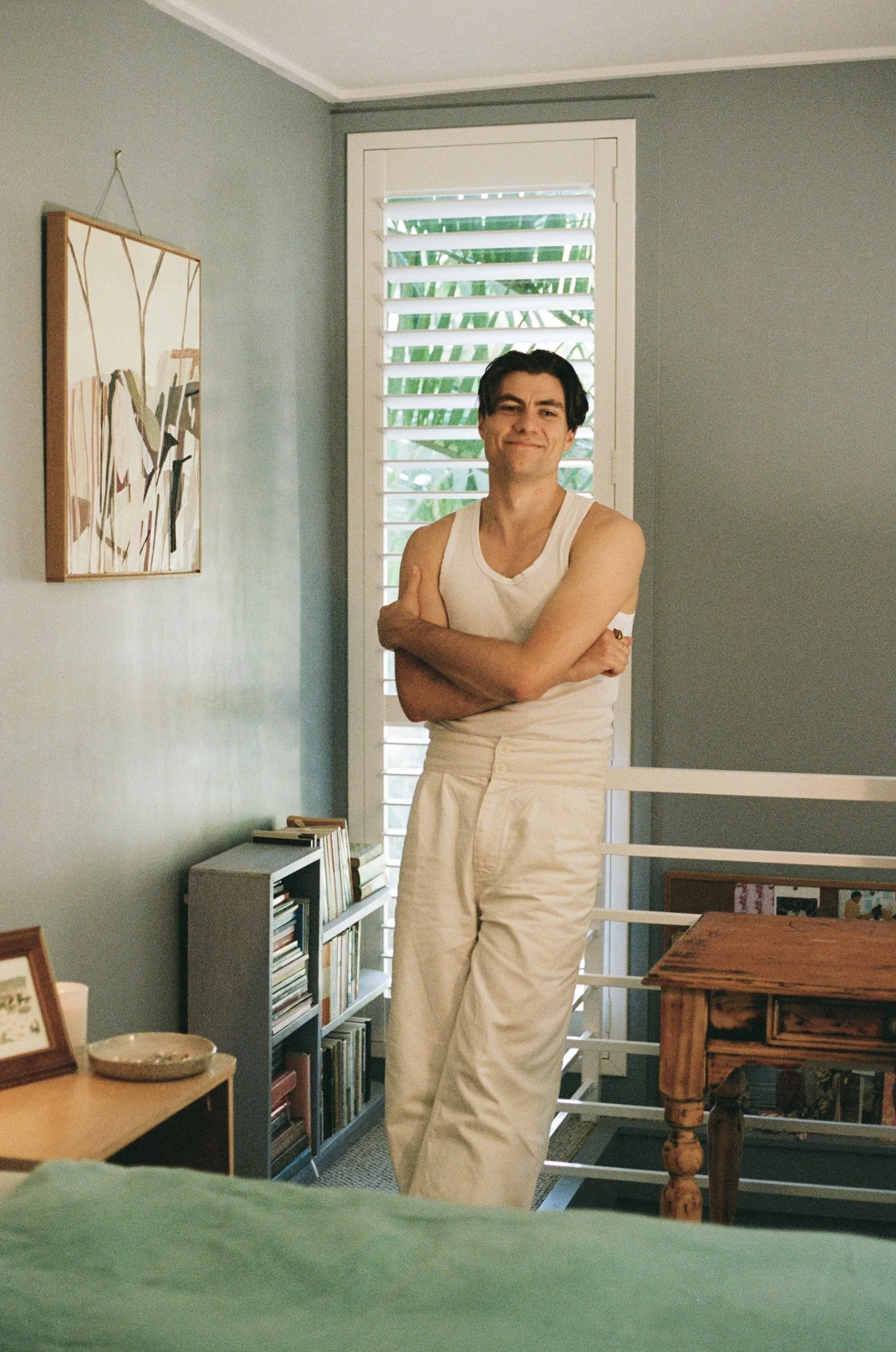
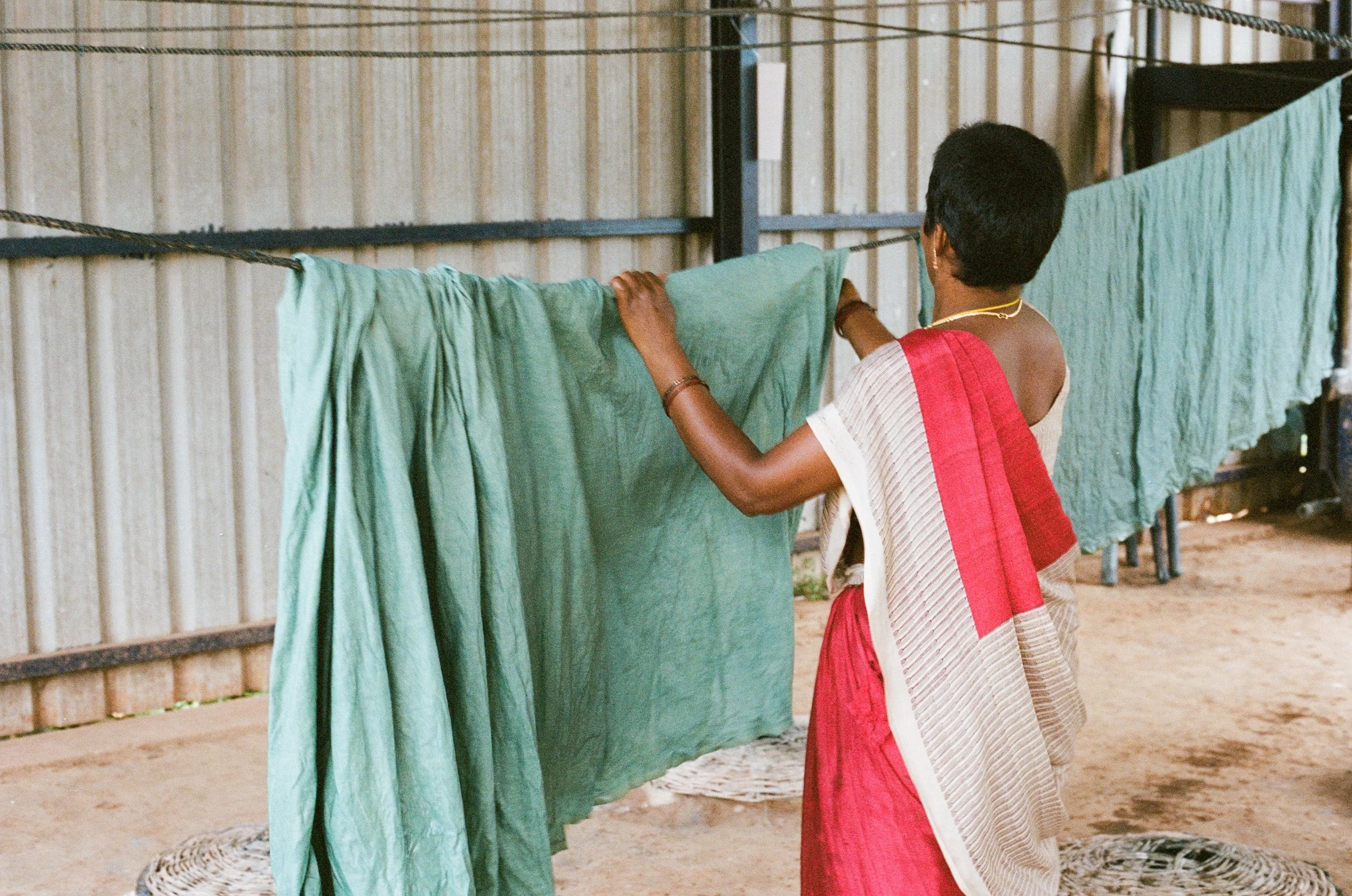
If design is a conversation with nature, what are the most urgent messages you are trying to voice through your creations?
That design needs to be exactly that; a conversation with nature. We have been speaking at nature for centuries and it is long past time we learned to listen and hear what creation has to both say and give. It is in this song that we find knowledge we needed all along — knowledge of cycles, of sufficiency, of return.
Natural dyes serve as a microcosm of this truth. When you dye with madder root or pomegranate rind, you are not so much choosing a colour as you are borrowing it. The plant has spent years accumulating that pigment, and the fabric holds it — imperfectly, honestly, in a way no synthetic process can replicate. Each batch is slightly different. Each garment ages into its own shade. That unpredictability is not a flaw — it is nature signing its name on the piece.
It’s funny to me how much this process has charmed me. Whilst there may be inconsistencies across pieces, I can’t quite understand how people are not drawn to this. It feels as though it is taking its rightful place in this age where the lines between human-made and machine-made are blurred.
Your work is slow, intentional and considered. What daily rituals help you slow down?
Morning prayer. Incorporating silence into my rhythms. Coffee at home from my beloved machine. Walking the streets of our little beach town with my husband. Having Bob Dylan or James Taylor serenade me. And a lot of time by, with and in the ocean.
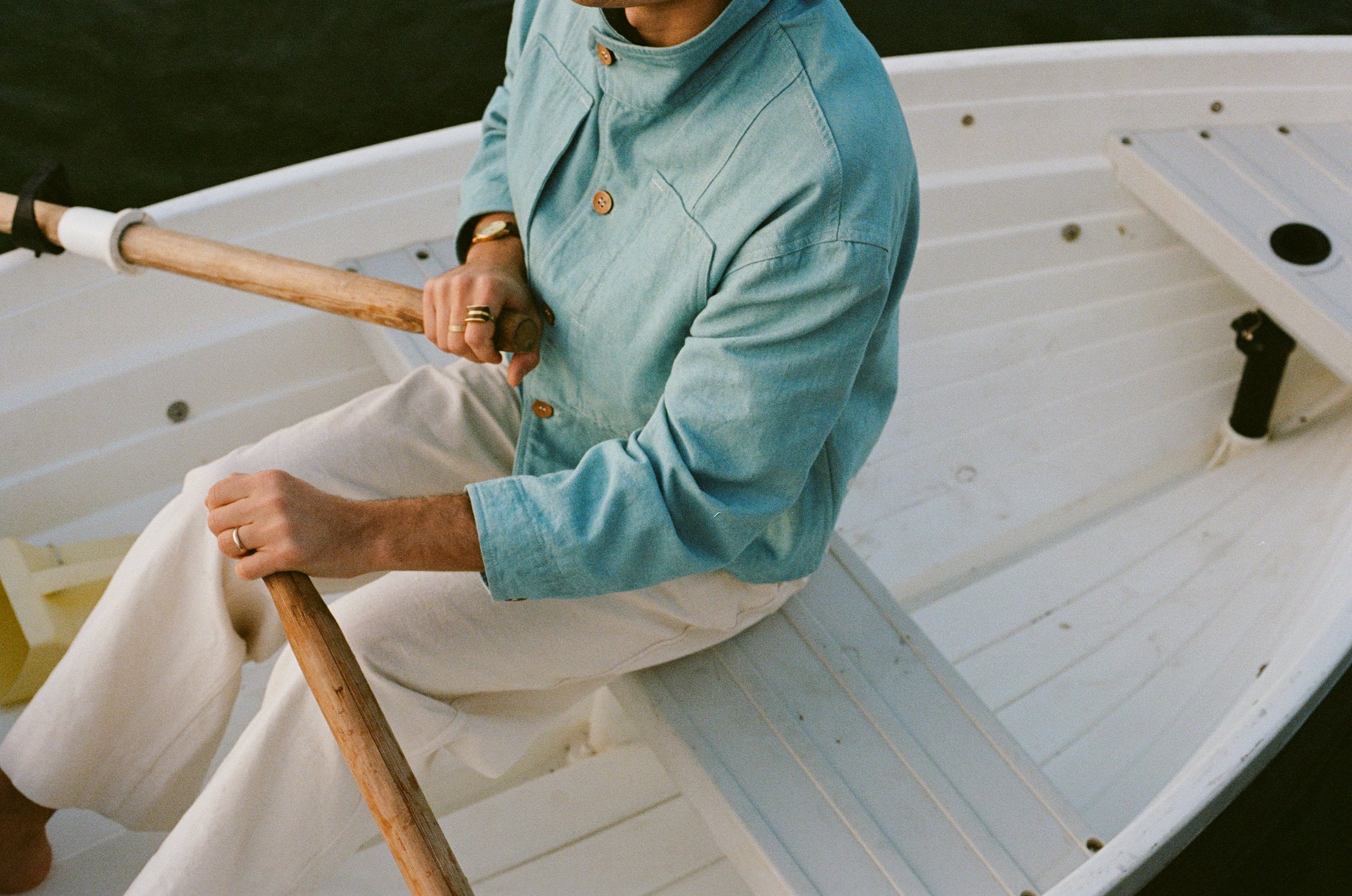
If your latest collection had a theme song what would it be?
The Downtown Lights by The Blue Nile.
Radical Yes Founder & Mother Kerryn Moscicki
With one foot in front of the other we slowly walk towards the light. The hope. That blinding vision buried deep within us. Some days it guides us. Others, our balance hovers between here, there and the complete unknown. This is where creation is born. Beauty ignited. Balance restored. For designer Kerryn Moscicki, dreams are in motion from the ground up, and staying close to the earth is imperative to be able to fly.
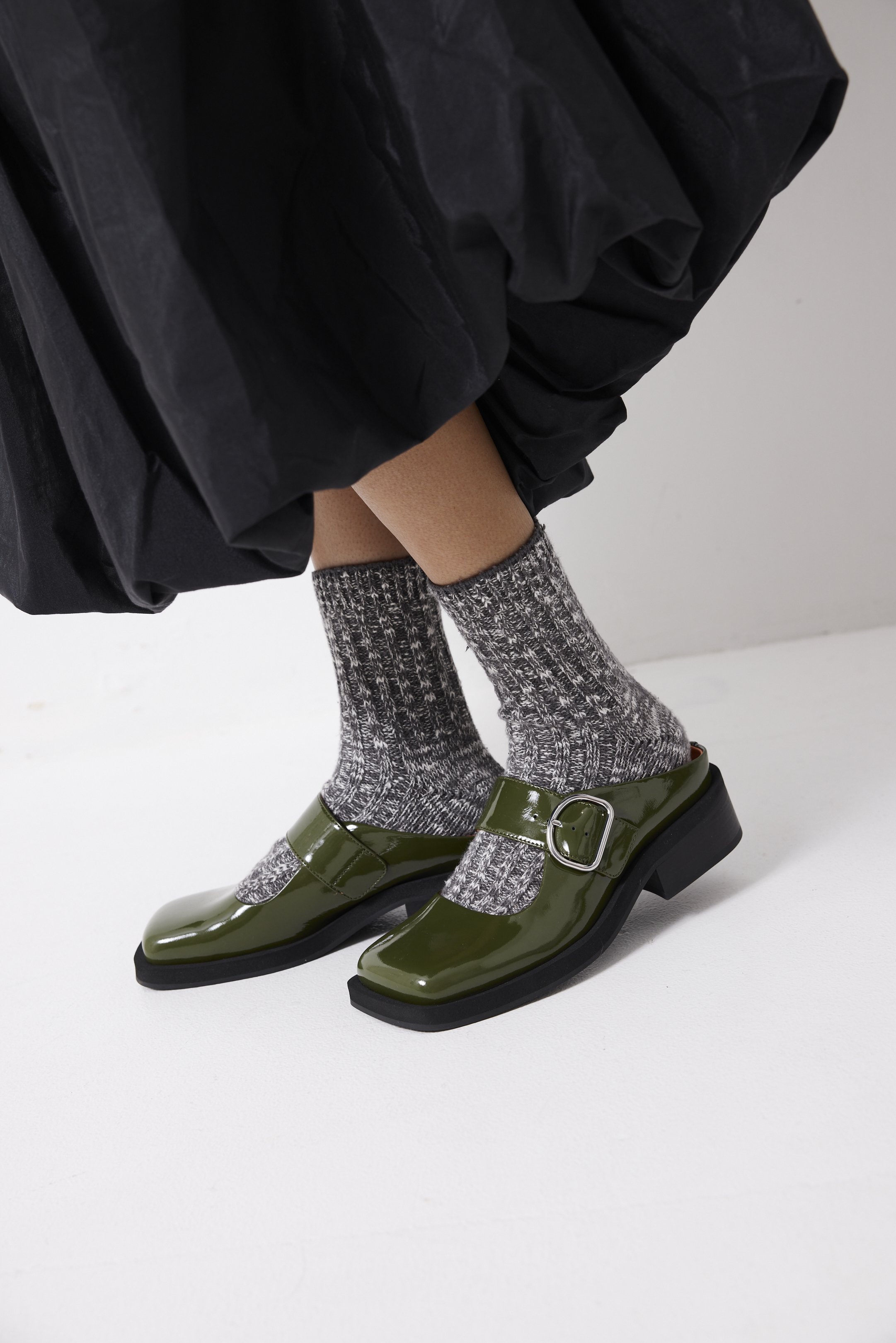
What scent does the Radical woman wear?
Our customer is complex, clever and creative. With this in mind she is somewhere between the sophistication of Black Pepper by Comme Des Garcons for the masculine-feminine dance that she is comfortable experimenting with, crossed with a hit of Golf Le Fleur by Tyler The Creator’s brand Golf, for the more playful, obscure and dreamy vibes.
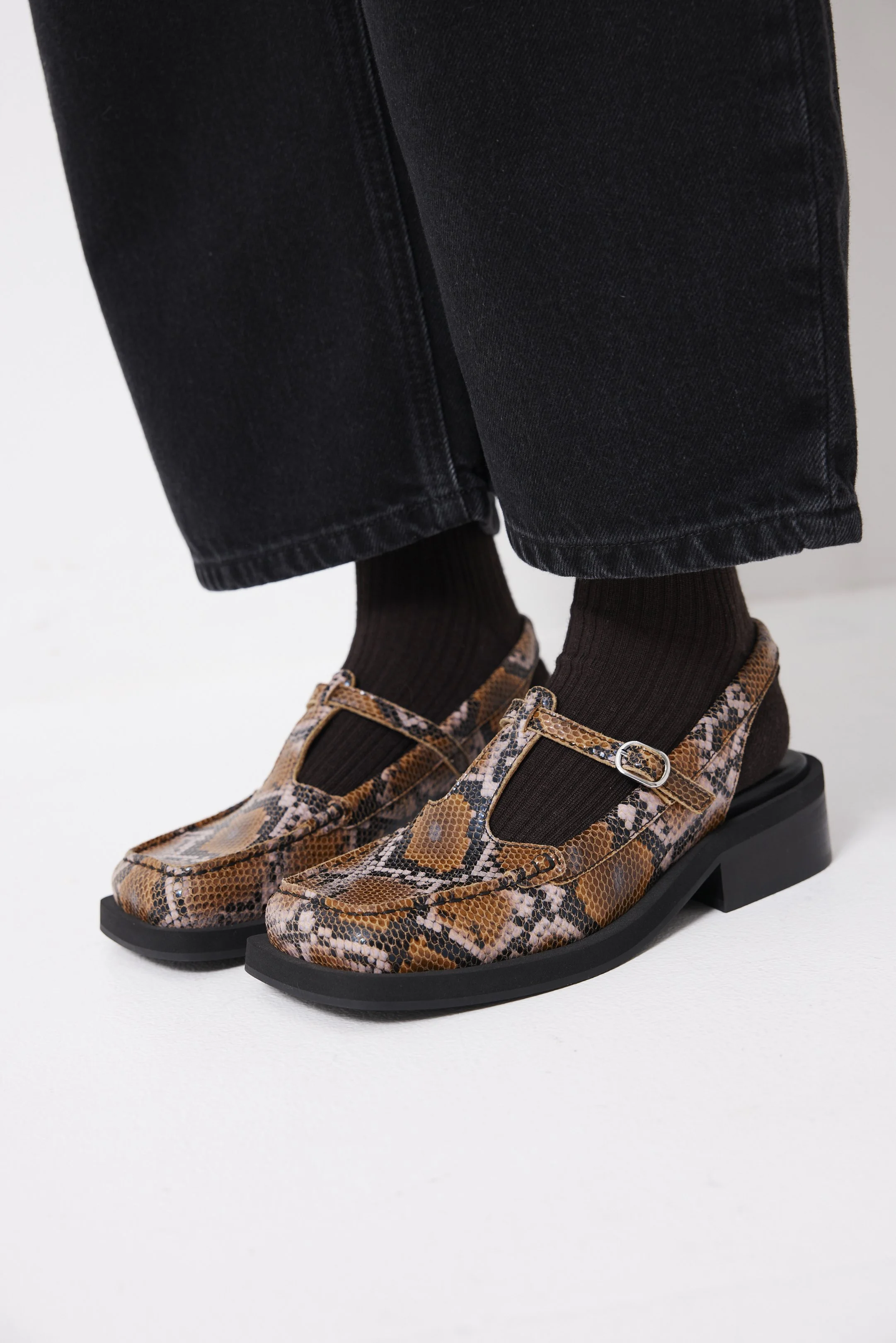
What does creativity mean for you?
Creativity is everything. My highest value for how I try to live my life and the defining value I try to share with my family and my team. Creativity is about problem solving and self development. Creativity is being honest with yourself and challenging yourself. Creativity for me turns up in so many ways from the tropey and obvious simple morning rituals - 10 sun salutes and a page of journaling - to more difficult situations. I have leaned on every ounce of my creativity to dream up a self-directed life with our business.
You’ve spoken about how flat shoes keep women connected to the earth. How does the physical feeling of being grounded shape your day?
It’s a fairly well known panacea that walking on the earth in bare feet is a grounding activity that can get you back to ‘center’. For me there is a kind of logical progression in that with our shoe choice - shoes that are flat, or low to the ground are nimble, freeing and agile. They carry you and encourage you to move. Conversely sometimes it is a heavier flat shoe - like our Patience boots - that give me a sense of anchoring and grounding. The feeling of ‘grounded’ starts from the feet up which is something I like to explore in the collection.
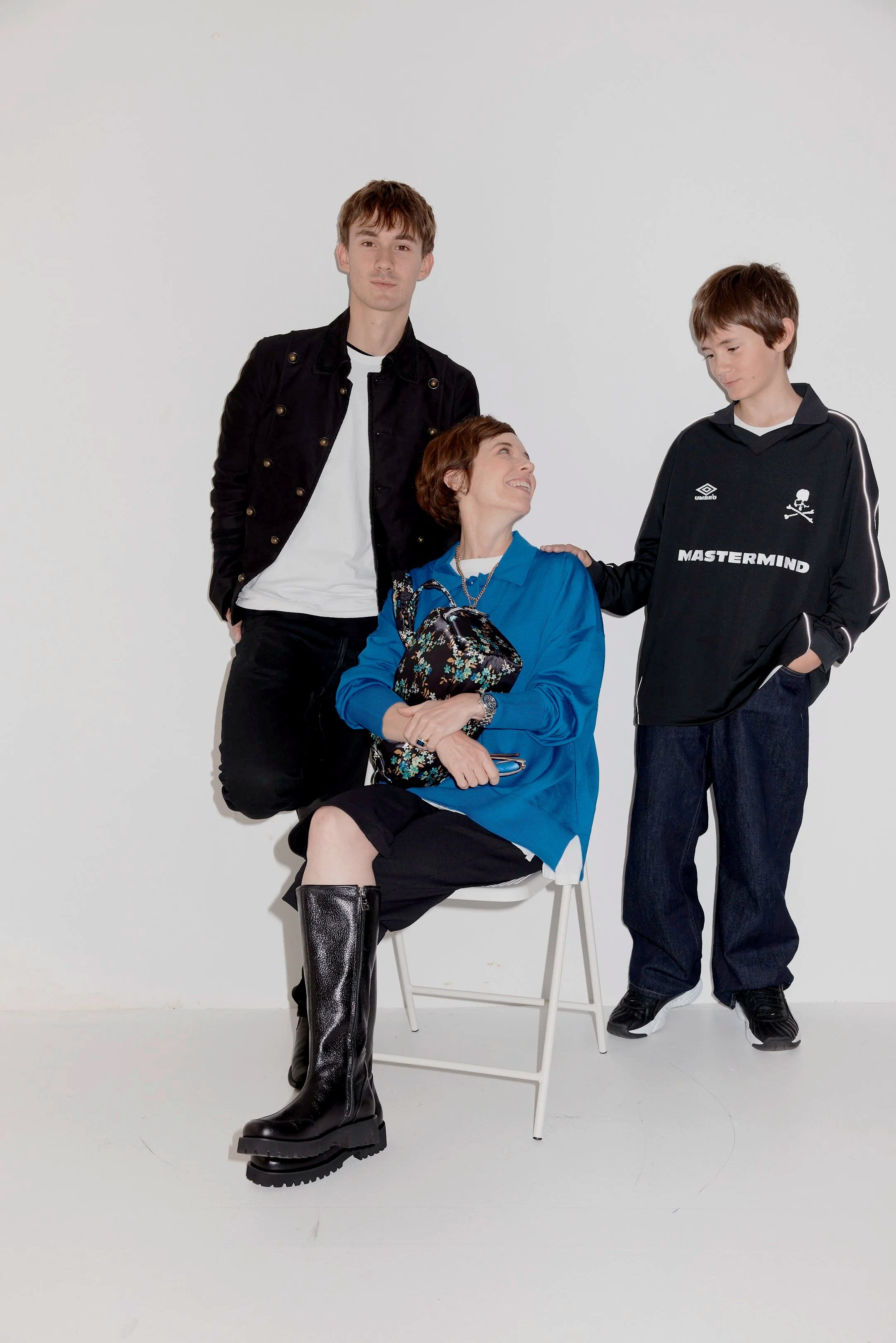
How has motherhood changed the way you move through life?
It has made me more decisive, less obsessive and probably much kinder.
What is the most memorable walk you have been on?
Last year I went to Paris for a writers workshop. I would walk everyday from my apartment in the 1st across the river seine to the cafe where the workshop was being held in Saint Germain. I would walk past Notre Dame and Point Neuf. If I went another way I would go right past the Shakespeare & Co book store. If I went another way it would be the small modern galleries in Saint Germain. It was the first time I had stayed in Paris for a good length of time and finally felt the true pace of the city which is somehow so much more relaxed than I believed from previous shorter burst visits. Those 9 days were the best walk of my life.
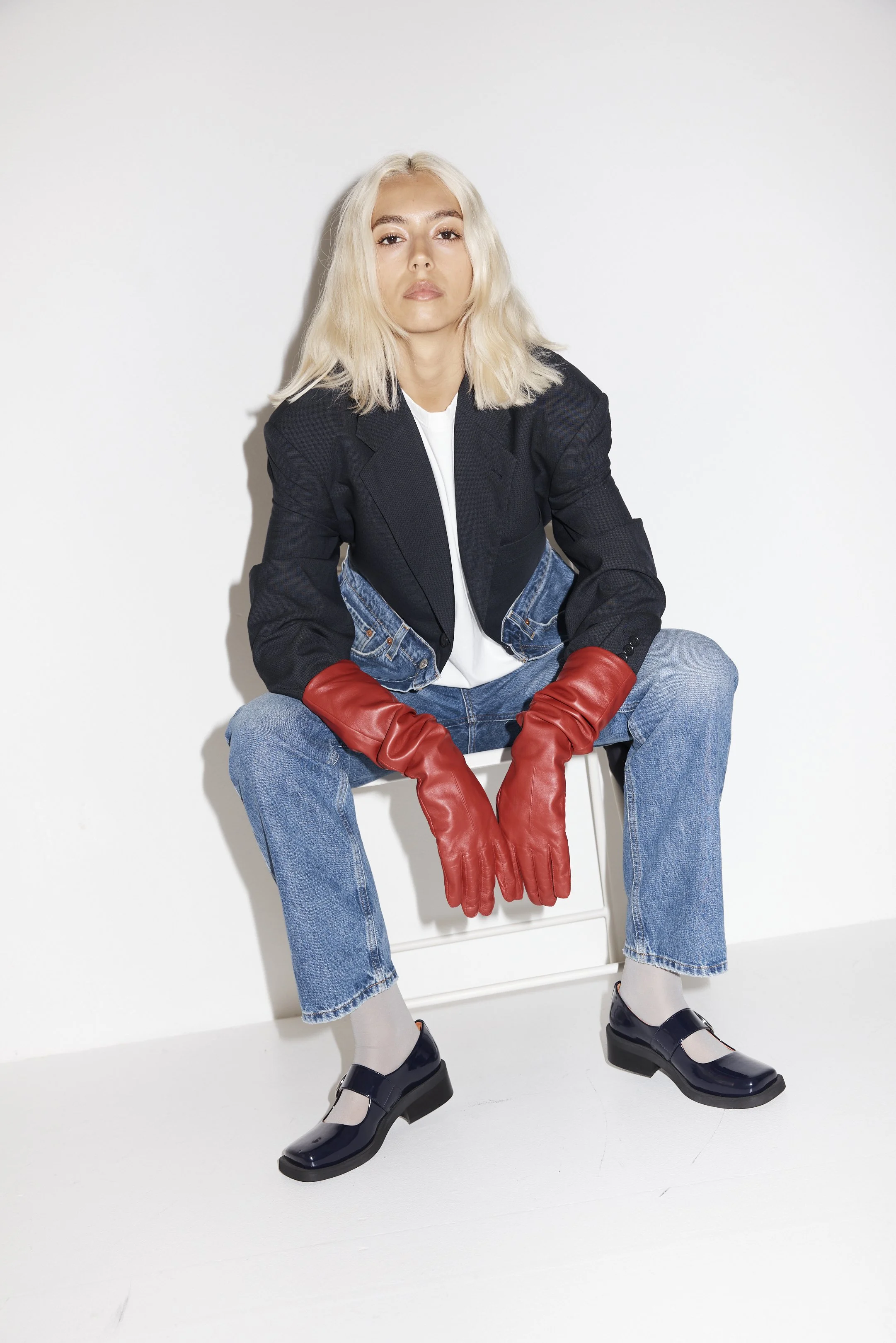
Who is the woman you imagine in the shoes you design?
Our woman is so complex. She is very smart and capable. She is a lightning rod to her family and friends. She has a sense of humour. She likes to try new things and is lit up by art and creative practices. She is experimental in how she dresses and likes to be challenged.
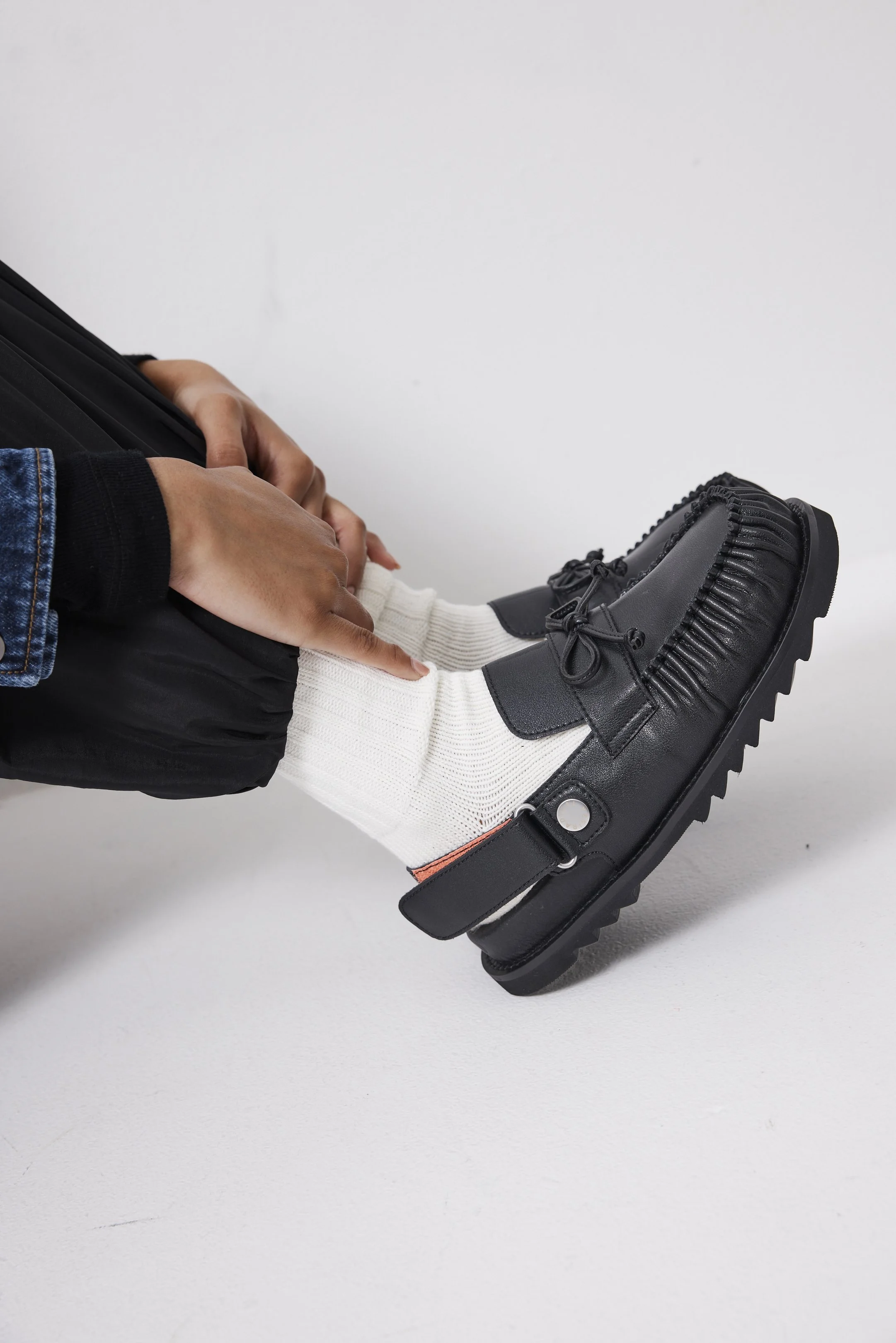
You have said before, a yogi always gets back up. How does this resonate in your approach to life?
It is so lovely that you found this quote that I have said before. Thank you. This is a kind of mantra handed to me by a teacher many years ago, that has helped in all my roles - as a mother, as a business owner and as a friend. This mantra gives me the mental clarity to always keep trying. For me, Yoga - really all movement and dancing - is a buffer against pessimism. Through my Yoga practice I have learnt about the idea of non-attachment which gives you a freedom to never take anything too personally and as a kind of result to always keep getting back up.
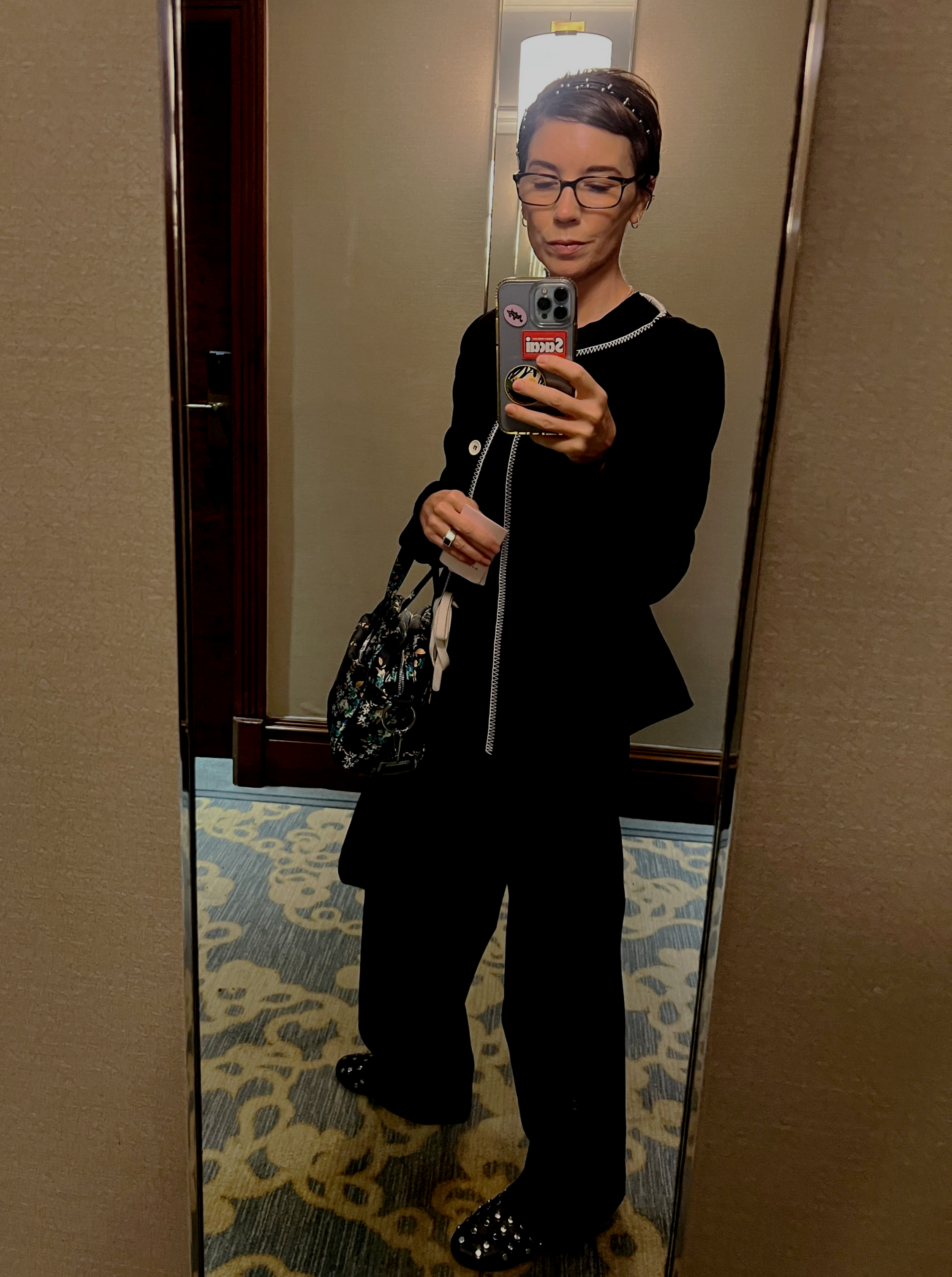
If today were a song for you, what would it be?
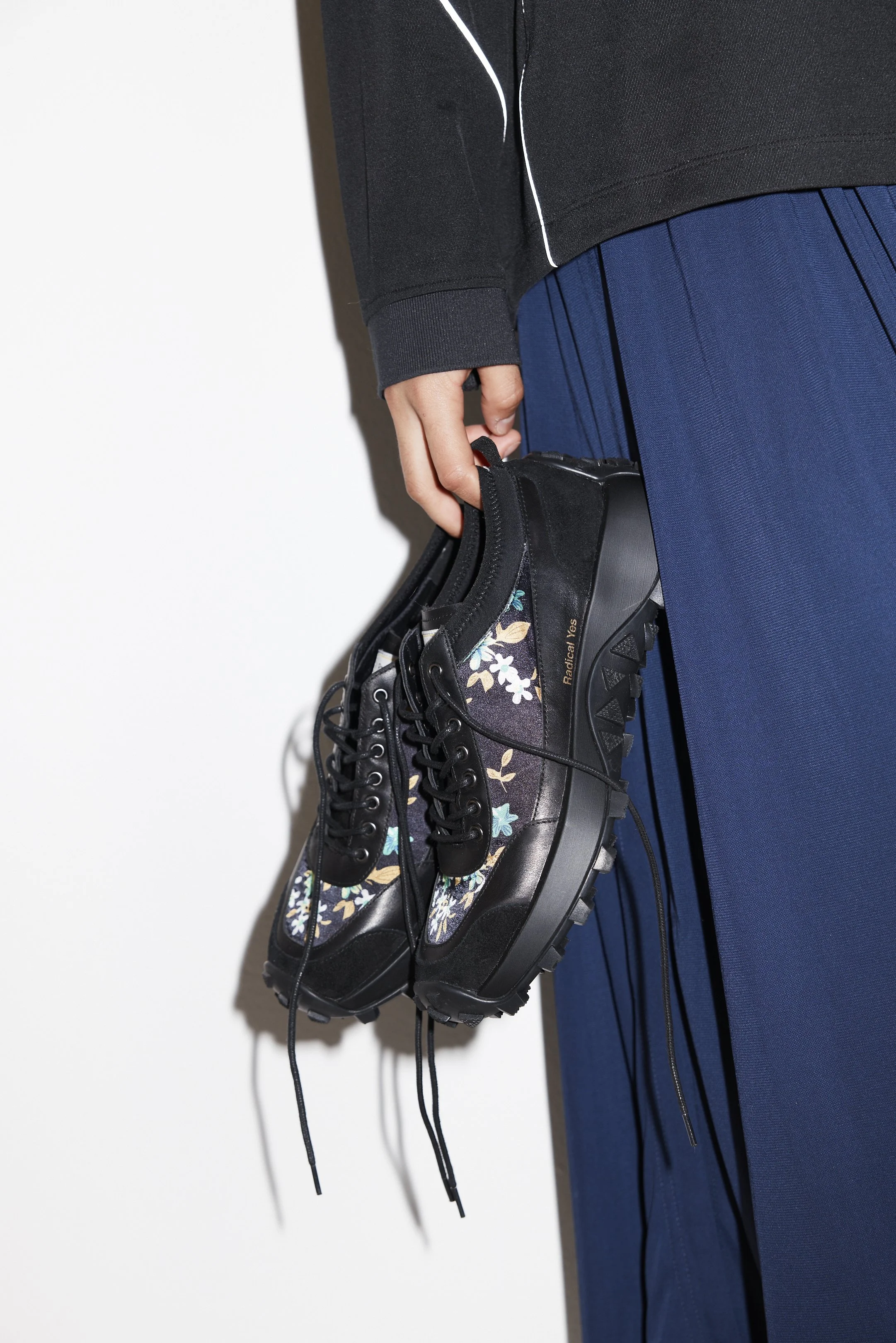
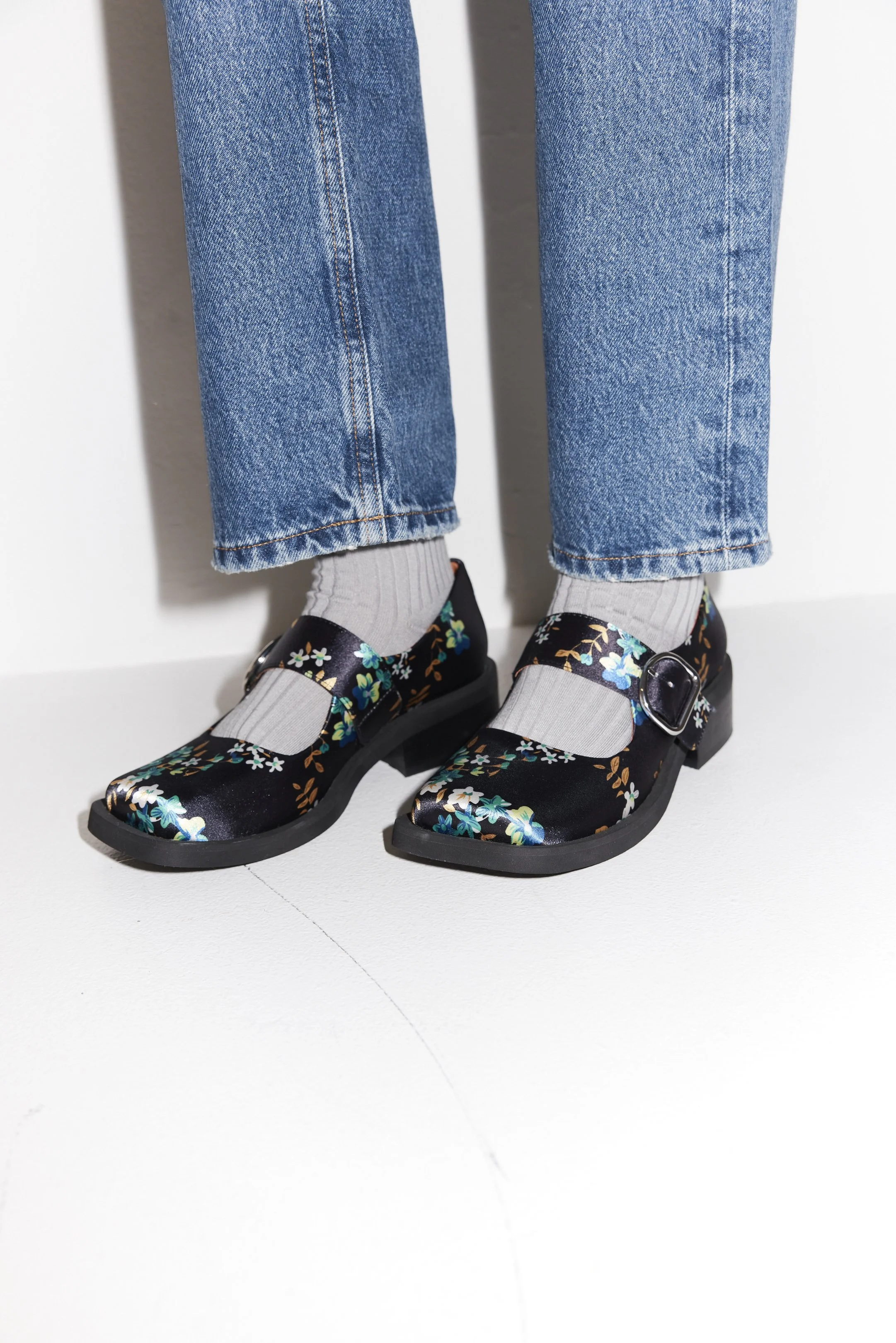
Such a good q.! Roland Clarke X Armand Van Helden ‘Flowerz’ remix - we have been working on our Mothers Day capsule which is (an irreverent but beautiful) midnight based flower print that we have have used on a composite of our hiking trainers and famous Monae Mary Janes coupled with a limited edition bowling bag - this song is the inspiration behind the name we gave to the campaign ‘She Gave Me Flowers’. It takes me back to really fantastic dance floors I have been blessed enough to have experienced in the late 90s.
Mother & Artist Loralee Jade
If life is a mirror, can you see what I see? There is a space between the becoming & the arrival we find ourselves seeking more from what the world has shown us. The past paints the future in shades of darkness & light. It can also ask us to create new meaning once we are ready to open our eyes. For Mother & Artist Loralee Jade, colour lives in the space between. The intangible is an imprint. The divine exists beside grief. And motherhood is the mirror.
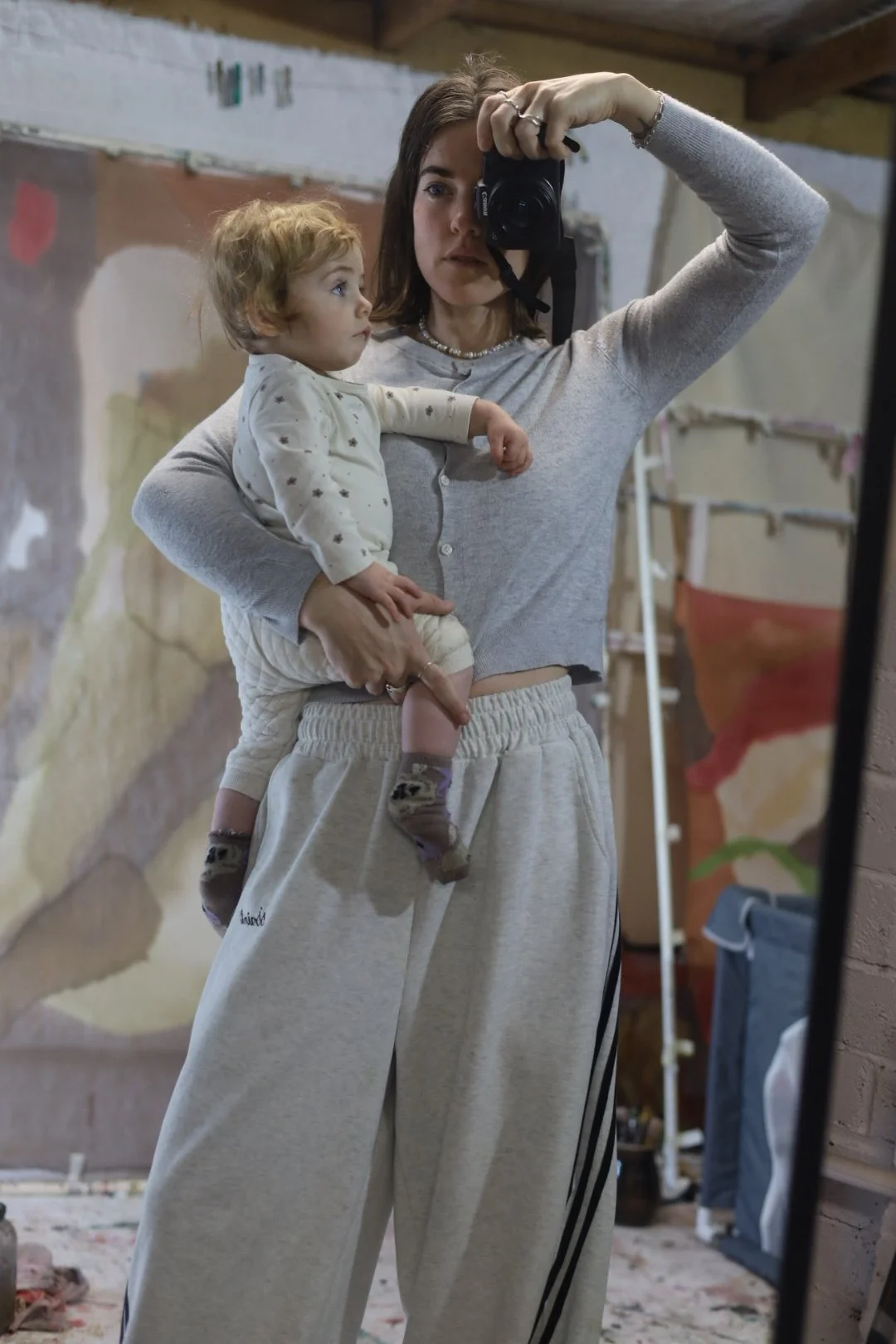
What colour does motherhood look like for you?
My first instinct is lavender, a soft lilac haze, but that’s my daughter, not motherhood itself. And I don’t think motherhood can be just one colour. I’ve never experienced anything in isolation. It’s always an interaction. There are two of us inside this bubble. She has to be here for it to be my motherhood, but it isn’t hers. Maybe the colour lives in the space between us. The meeting of maiden and mother. The transition shaping the present. It’s a warm powder blue, deepening with each resettling cuddle through the night. An eggshell beige ripening to yellow ochre with every new tooth. A pomegranate red that softens with a single blink. Magenta threaded with pale sage, because how could my own parents not be present here too?
What parts of yourself do you see in your daughter?
I see my desire for connection in her gripping fingers and stomping feet. The way she reaches with her whole body. The way she insists on closeness. I see my sensitivity in how quickly she studies a room before settling. I see my intensity in her determination, the refusal to abandon something once she’s decided it matters. She mirrors back parts of myself I hadn’t yet found the courage to be compassionate with. My impatience. My tenderness. My need to be seen. Until she asked me for patience I didn’t realise how little of it I’d extended to myself. There is something disarming about recognising yourself in someone so small. She feels innately familiar to me, as though I’ve known her before. And yet she is entirely her own. Just tonight I sat watching her sleeping face and realised that although something in her feels recognisable, I’ve never actually seen her before, she is becoming in real time. And in loving her, I am meeting myself again, not as I was, but with more gentleness.
When you are creating, what does it sound like? Internally or externally?
Externally, it’s usually classical piano, something repetitive and spacious, or the soft static of white noise through a baby monitor. The domestic hum. The reassurance that she’s sleeping. Internally, it’s different. It feels more like a tunnel of humming. Not silence exactly, but a kind of contained resonance. Sometimes phrases or words get caught in loops, circling until they dissolve. But mostly it’s a void of sound, a steady, physical quiet
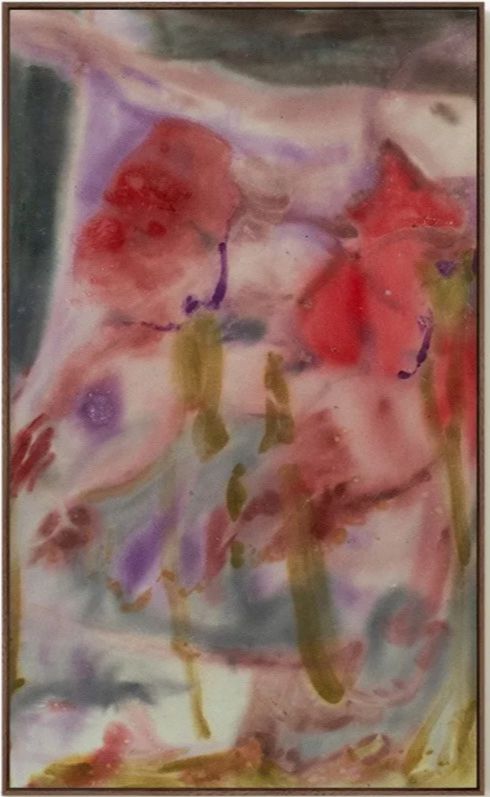
You work predominantly with silk. What parts of this element fascinate you the most?
The tenderness. No matter the form, the colour, or the emotion fused into its fibres, the lustre remains, it still reads as fragile. As sensitive. As something that requires care. I think it’s the closest material translation I’ve found for how I move through the world. Silk can hold intensity without losing its softness. It can carry weight and still appear light. That tension fascinates me. There’s also a thread of nostalgia woven through it, a quiet nod to my mother. When I was a toddler, I would follow her around the house holding the edge of her silk dressing gown in my hands. I was an incredibly quiet child, the youngest of four (at the time), and I always seemed to crave more of her than she could give. I would call out “dummy, silky, bottle” my small list of comforts, as if naming them might steady me. Eventually she cut a strip from that gown for me to keep. The first one was bright pink, printed with pigs floating in hot air balloons. It was pinned into my pockets throughout primary school. It became my safety. When my father died, I placed that bright pink strip of silk into his hand when I said goodbye. The one I have now is another early strip, light pink, softer in tone. A quieter relic. I still keep it. A small, worn fragment of something that once steadied me. If there were a fabric that described me, it would have to be silk.
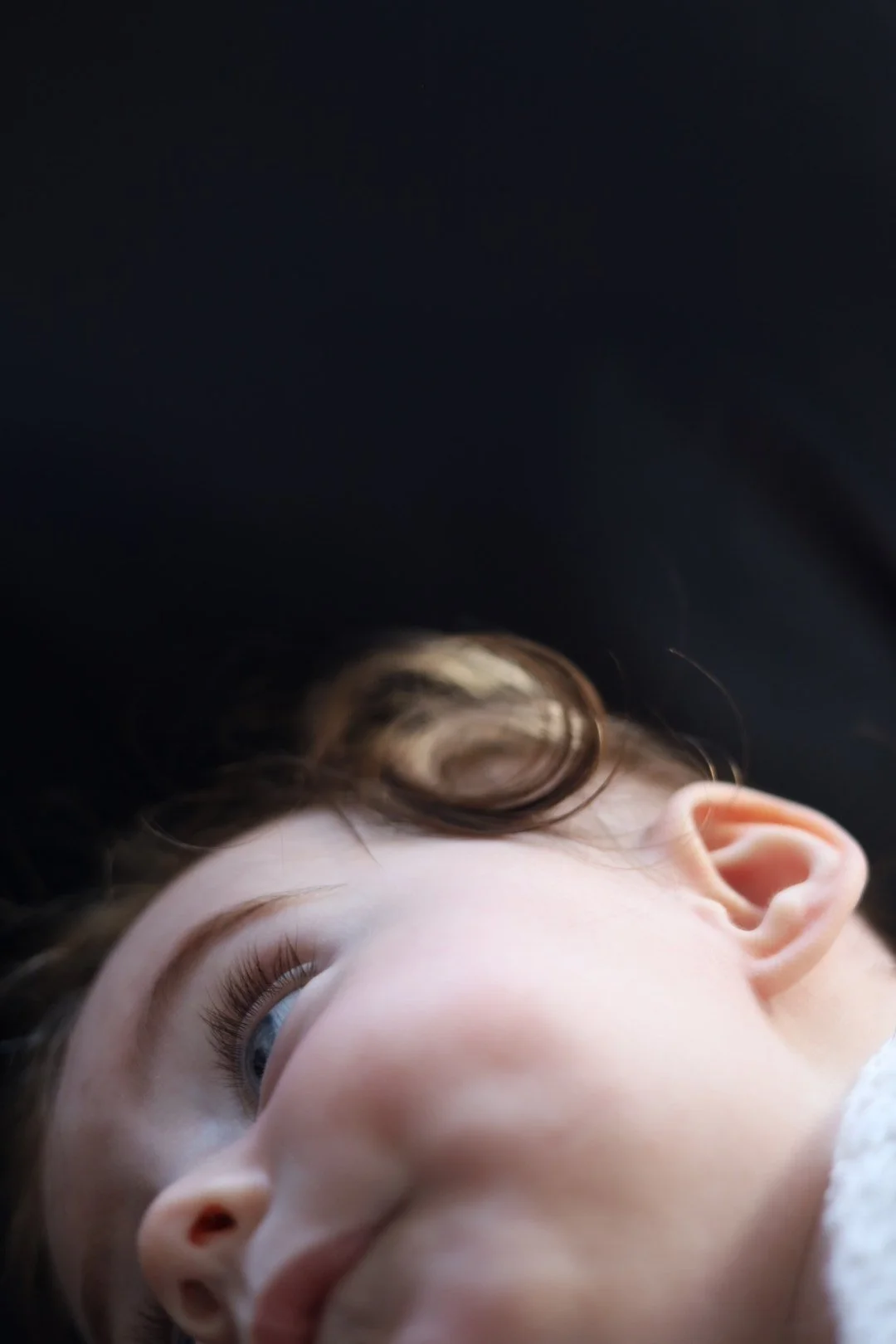
How has giving birth changed the way you see humanity?
I’m only a year and a half into motherhood and I still haven’t managed to catch up with the changes enough to put them neatly into words. All I know is that nothing reads the same anymore. We all arrive here completely dependent on another’s care. We begin by trusting a select few who become familiar to us. We learn through trial and error, through play, through reaching and falling. Watching her has made that truth impossible to ignore. There isn’t a single person I can look at now without recognising that they are someone’s child. The weight of that. The invisible thread tying every body back to the one that carried it. The weight of all mothers. Birth collapses the illusion of separateness. Everyone feels once-small. Everyone feels breakable. And that shifts the way you move through the world, softer, more aware, more responsible for how gently you hold what is not yours.
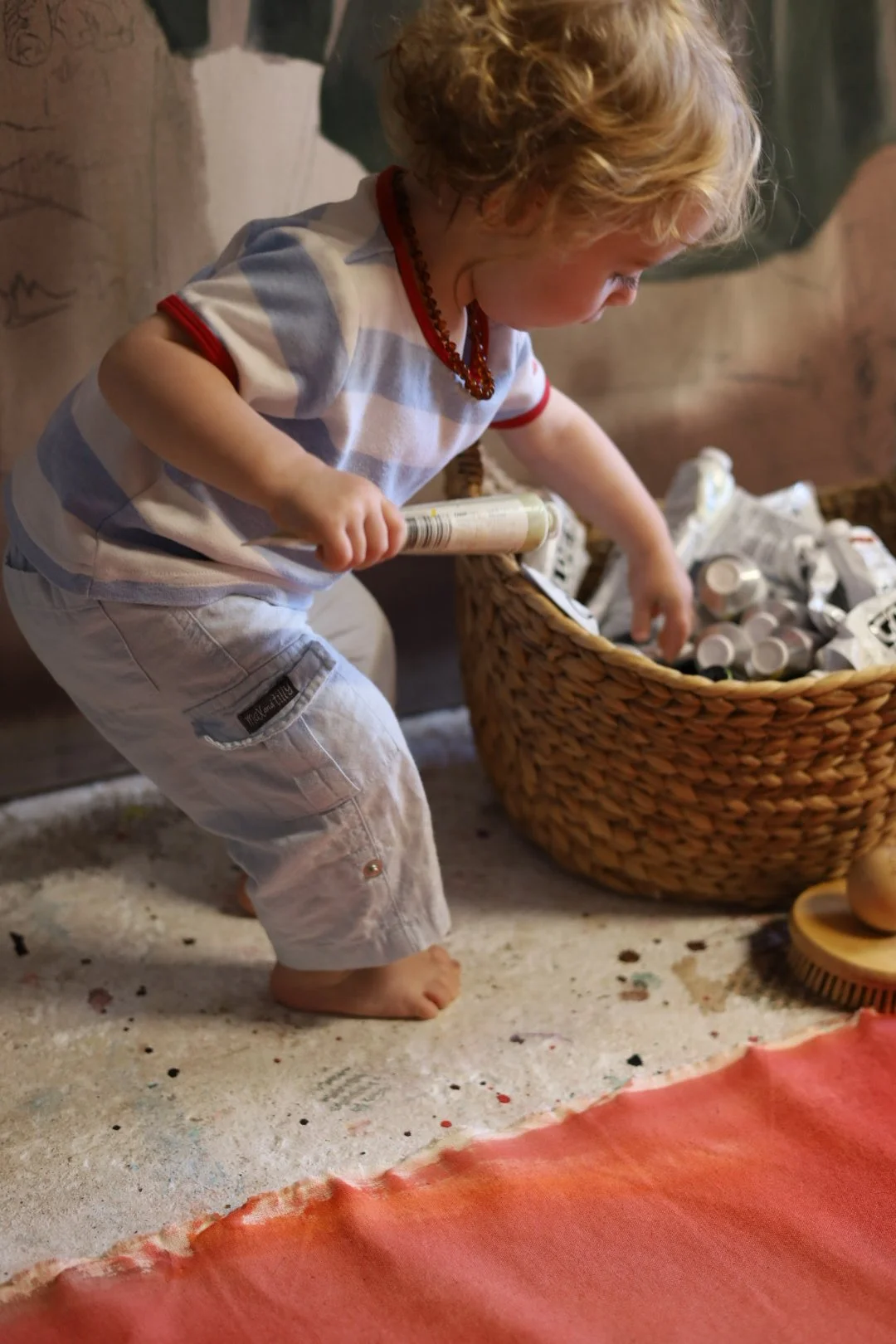
What is your first memory of creating something you felt proud of?
So many memories surface when I sit with this. I remember my older sister congratulating me for colouring inside the lines. We were sitting on the top bunk, working on an image of an owl. I must have been very small. I remember the feeling when drawing, the quiet satisfaction of doing something carefully and being seen for it. Later I drew a portrait of my Pa and became a finalist in a competition. I was flown to Melbourne. That was the first time I understood that something I made could travel further than I could. But the memory that feels like a turning point came after my dad died. I painted a portrait of him, not as I knew him, but from a photograph taken before he met my mum, before he was anyone’s father. He was standing on a boat, holding a fish, a bandanna loosely tied around his head. Sun burnt. Young, almost anonymous.
Looking back, I can see that I was painting him in a kind of threshold, before the roles, before the weight of family. But at the time I wasn’t thinking about liminality or symbolism. I was just a grieving teenager trying to understand what happened. When I saw the look on my family’s faces, I recognised the power art can hold. It wasn’t just about likeness. It was about returning him to us, and also letting him exist outside of us. It was the first time I understood that art could hold something too large for language and too large to carry alone.
In year 11, I took a creative writing class and wrote about the day I found out he had died. That felt different again . It felt real in a way I hadn’t experienced before, tangible. I saw myself inside the words. I felt myself inside them. It rocked me. I’ve reread that piece recently and it’s as though I’m snapped back in time. The body memory returns. The room. The shock. The smell. It’s still there, intact inside the language. That was the first time I understood that creating something could preserve a moment so completely, not just describe it, but hold it.
At the end of year 10, I put on my own exhibition. I filled the space with my drawings and paintings. I remember how incredible it felt to invite people into my world, not just to show them what I could do, but to let them see how I saw. Pride, for me, has always been tied to connection. It’s never been about skill. It’s been about recognition, of something true.
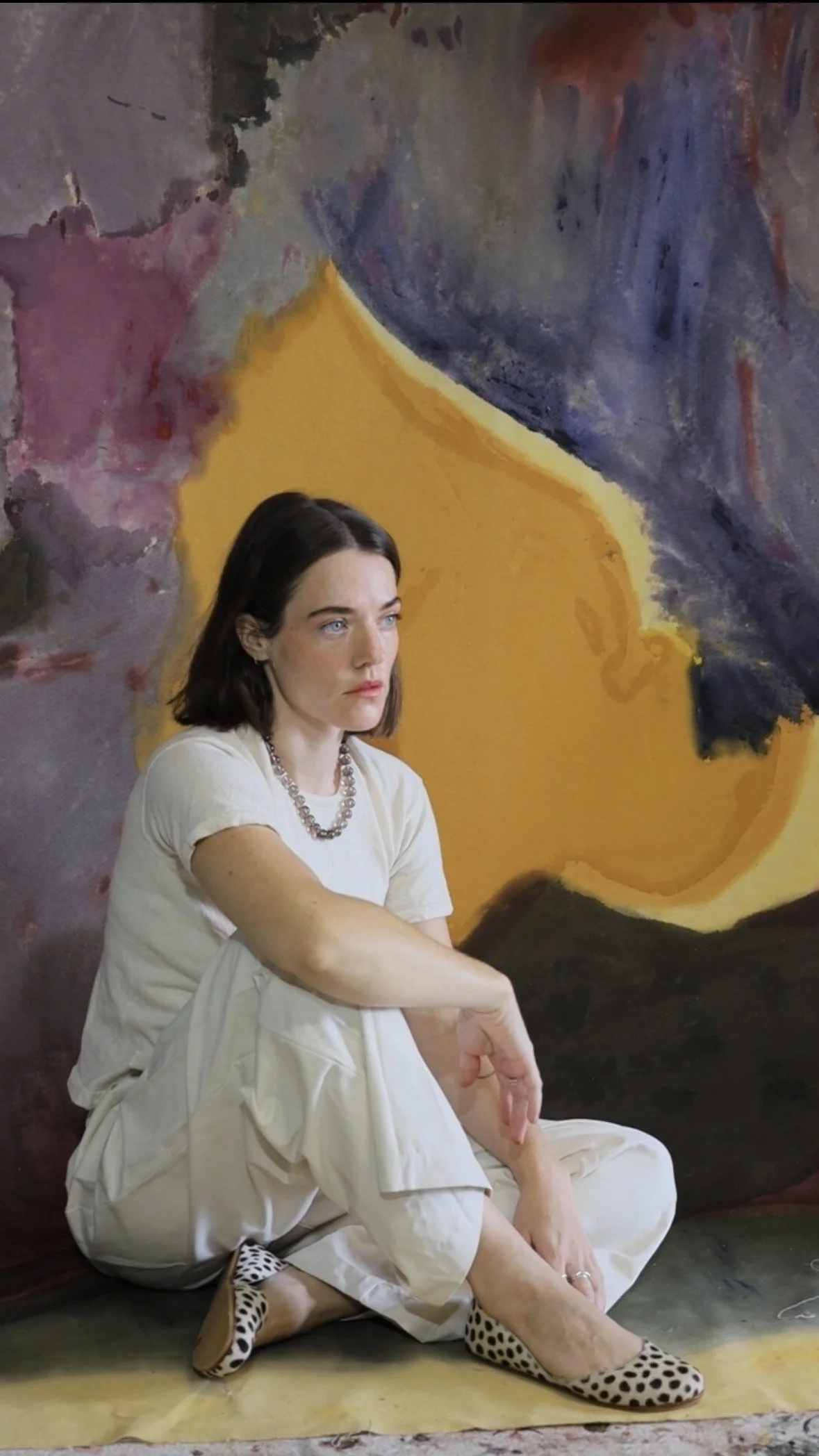
The palettes you choose have a soft, delicacy to them. Yet the finished works are always breathtakingly powerful. How do you find balance between the elusive and the real?
I’m very conscious of that tension in my practice, the contradiction between what appears gentle and what is actually immense. I don’t think I’ve ever experienced an emotion in isolation. There is always something else woven through it. Even joy carries ache. Grief often holds relief. Every feeling I’ve ever had has carried another inside it. So when I paint, I don’t try to resolve that duality, I let it sit. The softness in the palette isn’t about fragility, it’s about access. It draws you in. But once you’re there, the work can hold something heavier. Something more bodily. More real. I paint from my honest state at the time, if something feels elusive, I allow it to remain partially obscured. If something feels raw, I let it press forward. The balance isn’t calculated, it comes from trusting that both can exist at once. Because they always do.
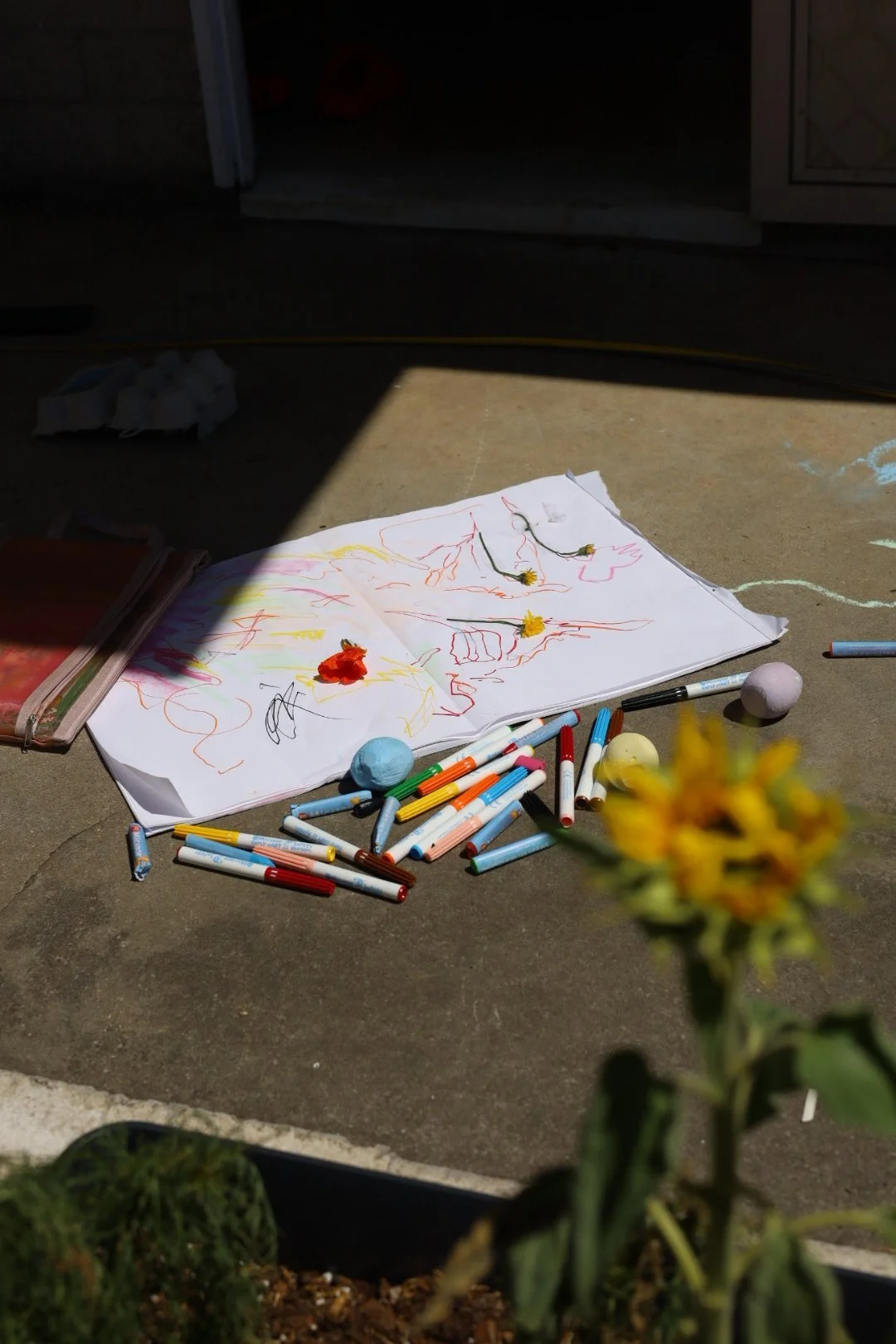
When your daughter is old enough to understand, how will you explain why you paint?
Having grown up around me making every day, my hope is that she’ll know without needing to ask. But if she does ask, I’ll tell her this. Painting is how I live. It isn’t just the moment my brush touches the canvas. It’s the noticing. The documenting. The questioning. The listening. The quiet collating of what it feels like to be here. Humans have always made art. It’s how we understand our time. How we express what can’t be neatly said, how we navigate grief and joy and change. How we connect to each other across distance. It’s also one way of keeping our hands busy, a quiet remedy inherited from our grandmothers. Women have always worked with their hands while carrying the weight of a household, a body, a grief. Sewing, mending, kneading, stitching, tending. Making as a way of steadying the nervous system, a medicine. Painting feels like it belongs to that lineage too. For me, painting isn’t a decision I make, it’s a way of being. And it’s something my daughter will have witnessed long before she has the words for it.
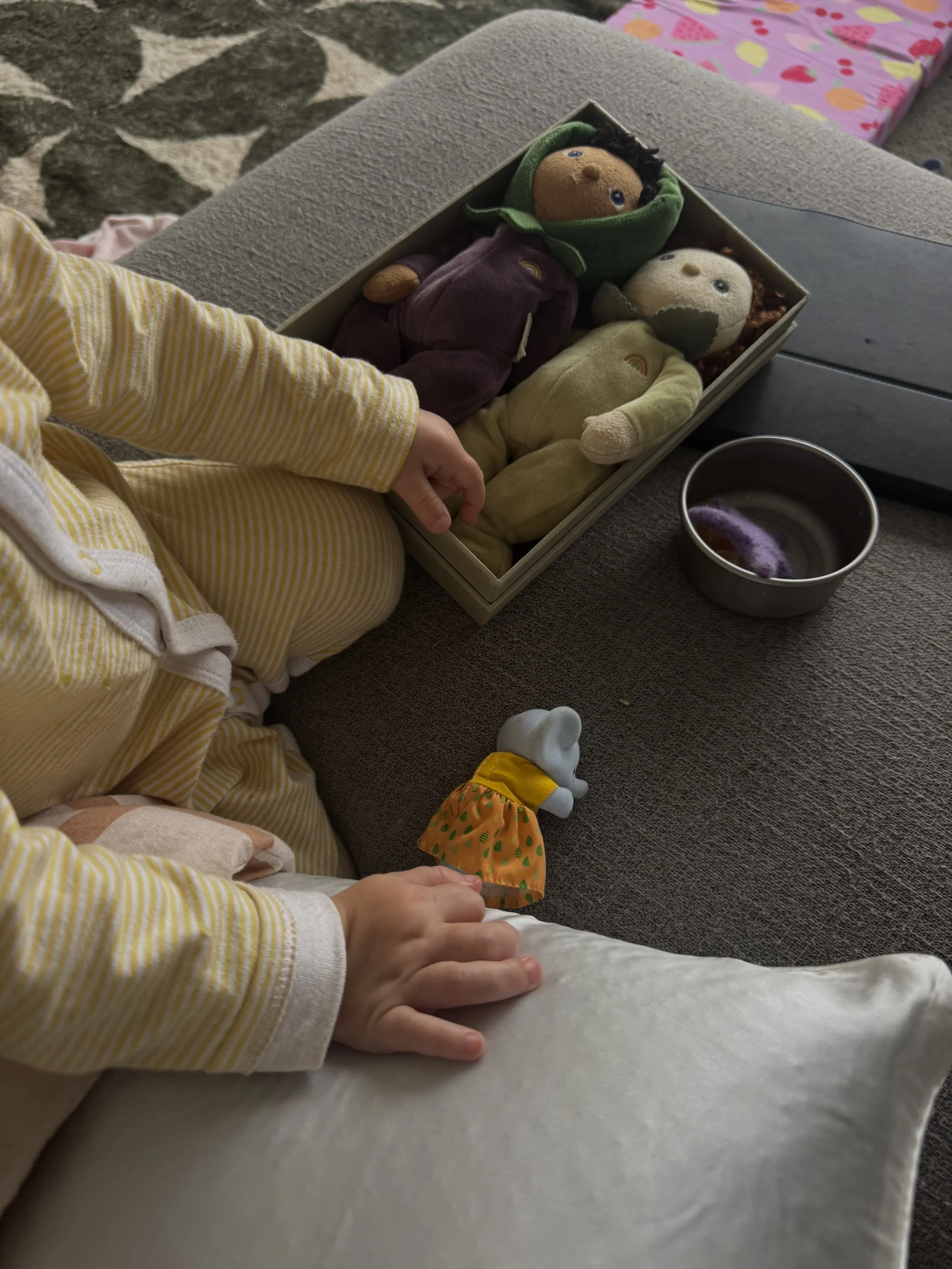
Mother & Model Kennah Lau
The power of softness moves us in insurmountable ways. A gentle breeze can cool the heat upon your skin. Morning light casts colours along the river we can’t describe. And if you look close enough, even the bravest will feel their shape has shifted by the caress of newborn skin. Creating life soars high above pedestals. It doesn't wear a crown. It asks for nothing and everything all at once. For Mother & Model Kennah Lau, mothering is her work of art.
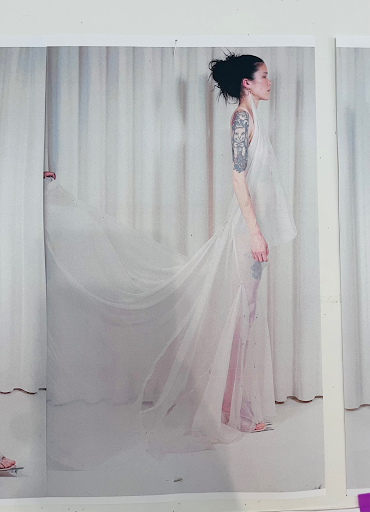
How does being in front of the camera make you feel?
I feel invisible. I have this deep knowledge that none of the pictures they’ll take of me will really capture who I am, and it’s a wonderful feeling of complete surrender. I am at peace knowing that I can walk away from a shoot with 1000 images taken, and only one or two, if that, will match how I see myself.
What parts of being a Mother sparks your creativity?
Mothering alone has sparked my creativity. What I mean is. no one helped you grow that child. You brought them into the world all by yourself. And that fact will drag you down some days, and feel like the safest thing in the world a day later. I constantly have to remind myself that how I mother is my work of art now. I’m raising my son in a country that I was not born in, in a language I don’t speak fluently, making ends meet in an industry that offers no financial stability. This feels to me like doing backflips with my eyes closed and my feet tied together. And sometimes all this feels like our little cocoon. Surely the most creative thing I’ve ever managed to pull off.
What rituals calm your nervous system?
True crime podcasts, FaceTiming my best friends, burying my face in my girlfriend’s neck with my eyes closed and taking ten deep breaths, chopping vegetables, smelling my baby’s head.
When working on set, what soundtrack or song is most likely to ignite you?
London Bridge by Fergie.
Travelling and working in fashion, do you have a favourite piece to wear that makes you feel like home?
The best moment of the work day is always putting my own clothes back on- my favorite thing to wear after work is my old, Aigle XL cotton button- down shirt. I actually think it might be ugly? I’m not even sure, I can’t see it objectively. After a day of being covered in makeup and hairspray, the best smell is the smell of my house and my own clothes. Bike shorts, sneakers, sports bra, old button-down shirt.
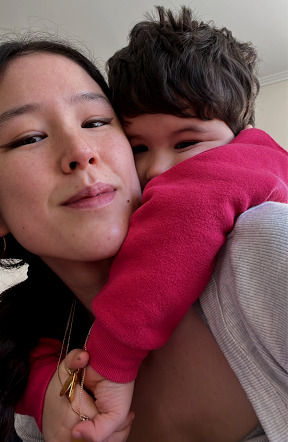
Can you share an image of yourself that captures you feeling your most powerful?
This is it. Me and my baby. I’ve had a tough few years personally, and my super power is that I’ve instinctually showed up for my kid no matter how rock bottom I was. Earlier we spoke of creativity- and this is it. It’s finding a rhythm, when your body takes over and creates a home for your tiny human even though your brain doesn’t always know what to do.
You and I share a love for poetry and the written word. Do you have a writer or quote you turn to when you need clarity or inspiration?
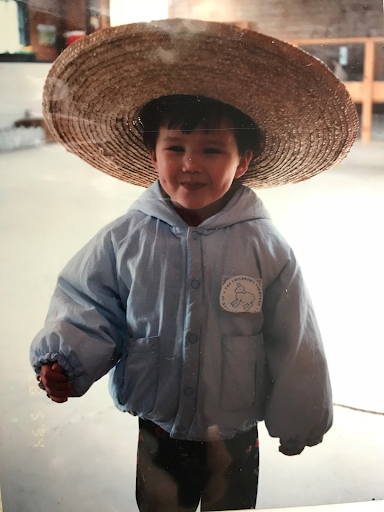
The poem “Peanut Butter” by Eileen Myles is my go to text for clarity. The middle of the poem goes,
“why shouldn’t
something
I have always
known be the
very best there is”
I’ve read this poem while rocking my baby at midnight, after big fights I thought I’d never calm down from, while falling in love… I’m not sure if I read this poem accurately, but it’s always felt to me like a reassurance that I will die knowing love. That the love I have invested in will always come back to me.
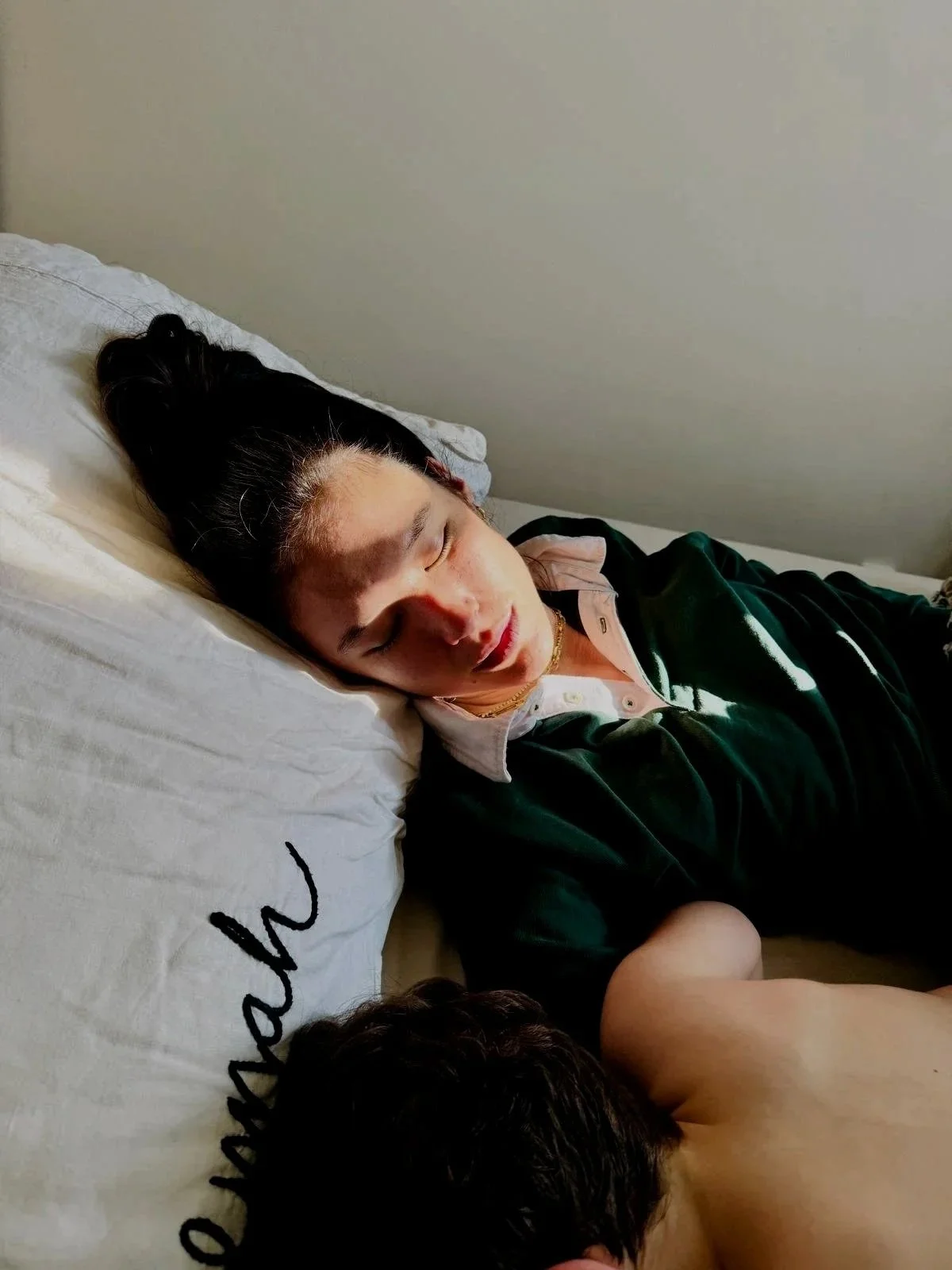
As the mother of a little boy, what hopes do you have for the world he is entering?
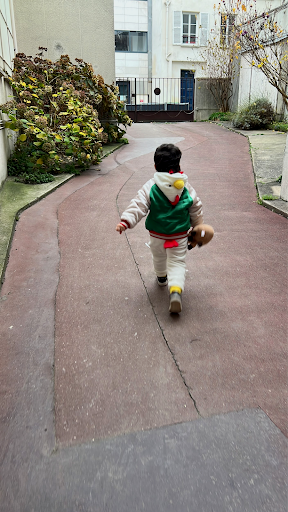
I’ve thought a lot about this question the past few weeks. Raising a boy who is white passing in this world of terror and violence is a huge responsibility; the thought of him being anything but kind and open and gentle keeps me awake at night. The world I brought him into is cruel. Families are being torn apart at the hands of men. I don’t have high hopes for the world, but I do hope the babies we raise will grow into soft adults. I hope that parenting differently than our parents did will have an effect on the world he is entering- I hope holding him through the night when he cries grows him into an adult that will stop to listen to the voices of babies. I hope that surrounding us both with soft, gentle love will teach him to prioritize that in his own relationships in the future. My hope for the world he is entering is that some softness will peek through the cruelty.
Artist Katharina Kaminski for Lovewant Magazine Issue 37
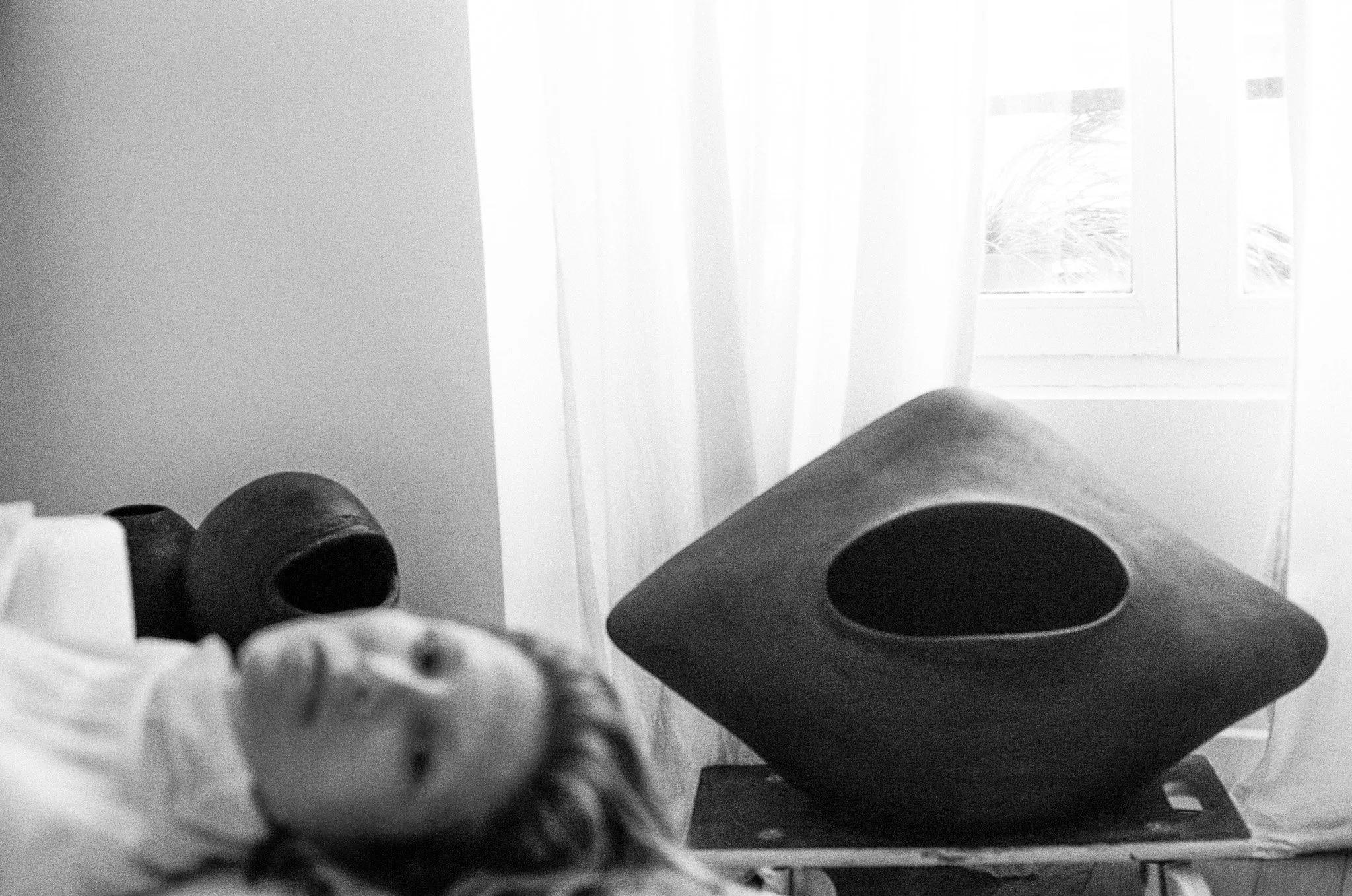
Born and raised in Uruguay, artist Katharina Kaminski believes we are co creating with life. Her hands travel through clay, nature's rebirth from earth, caressing and considering what it means to be here in the now, how we arrived, and who we are beneath it all. Like a wide eyed newborn full of wonder and awe, her visions come to life through sculptures that embody parts of herself she may or may not have met before. Eternally evolving in unison with her work, Katharina’s belief system is the powerful reminder we all need to hear.
“ We are so used to being alive, we forget how miraculous it all is.”
What is the meaning of creation for you?
I love this question. I love creation. I think a lot about creation. Creation can be so enjoyable and exhilarating but creation can also unveil frustration and make us look face to face with our shadows. And when I think of creation, I am thinking about everything, I am thinking of my whole experience. From a sculpture or a painting, to my relationships, my home, my work, what I am doing today, everything. I think we are the creation of ‘God’/’Universe’/’Mother Nature’ but we are also the creators holding that same power that created us ourselves. I think there is a bit of a collective

What is the most profound lesson you have had to learn through your craft?
Patience, resilience. Constant inner check ins. It's an ongoing lesson. I don’t think it ever ends. There is always a next level to be unlocked.
What inspired your exploration of color and movement in your work?
Mother nature and my inner experience of being alive, embodied in a human form on planet earth. We are so used to ‘being alive’ that we forget how miraculous it all is. Look at the world as if you were looking at it for the first time and you will be amazed.
Your sculptures ignite a visceral connection between body and soul. Do you feel like you have met them before?
Hmm. It's complex. Yes and no! It feels many times like ‘Wow! Nice to meet you! Where do you come from and how did you manage to become bodily through my hands?!’ but it also can sometimes feel like: ‘I remember you from a past life or something and I can feel our resonance, like maybe you are me and I am you’.
How do you see the relationship between the viewer and your art?
That’s the one thing that exceeds me. I am glad that viewers connect with my work but it's not something I can control. And I can’t even really know what they see. I have my own intimate relationship with the works and they have theirs. It's beautiful and it's strange in a way, especially collectors that live in their spaces with my creations. They see the sculptures everyday and they have their own intimate relationship with them, which is a different connection from the one that I have, because we are different beings with different human experiences, different lenses. I can’t tell you how to see my work, I can’t tell you how to feel it. And sometimes that can be also challenging. Especially when the works have such a deep meaning for the artist. At some point you need to let go of that, and let it become also something else through the eyes of others. But that’s the beauty of putting the art out there and letting it touch others in infinite, different possible ways! The other day someone said he disliked one of my sculptures. And I said thank you! I truly appreciated generating that! And their honesty. To me, art doesn’t have to be just beautiful. Art is about feelings and what it reflects back from your own personal experience.

How do you know when your work is complete? What does it feel like?
I guess that's something I'm continuously finding out. But when a work is complete, it feels right to let it be.

You resonate with the notion that nature doesn’t want to put you in a box. How do you stay outside of it?
When a baby is born, there is paperwork the hospitals fill, and one of the main concerns is the sex. There is one box for girls, and another box for boys. And you are not supposed to mark both. The idea that someone might not conform to the binary norm is disturbing to many. But this is just due to the lack of information there is. It’s estimated that almost 2% of the population are born intersex (somewhere in between the binary norm of sex as we have been taught). Which is a similar percentage as people with red hair. But of course sex is not necessarily visible in the street and remains to be a stigmatized topic. Because of this, many kids born with intersex traits, have to go through unconsented, uninformed and irreversible surgeries, which the intersex community is fighting against. Long story short, the evidence shows that human beings don't have to necessarily fit in one of the female or male boxes. I consider myself a woman but medically speaking, my womanhood looks different than most, and I believe that this shouldn't be seen and treated as a ‘problem’, but be embraced as another of the infinite ways Mother Nature expresses itself. There is no real proof that my ‘condition’ is a ‘mistake’ and I believe the mistake is actually making intersex kids perceive their beautiful perfectly healthy bodies is a mistake. Instead of promoting self acceptance and even self celebration. We are all unique, with different looks and capacities, and I think that is beautiful.

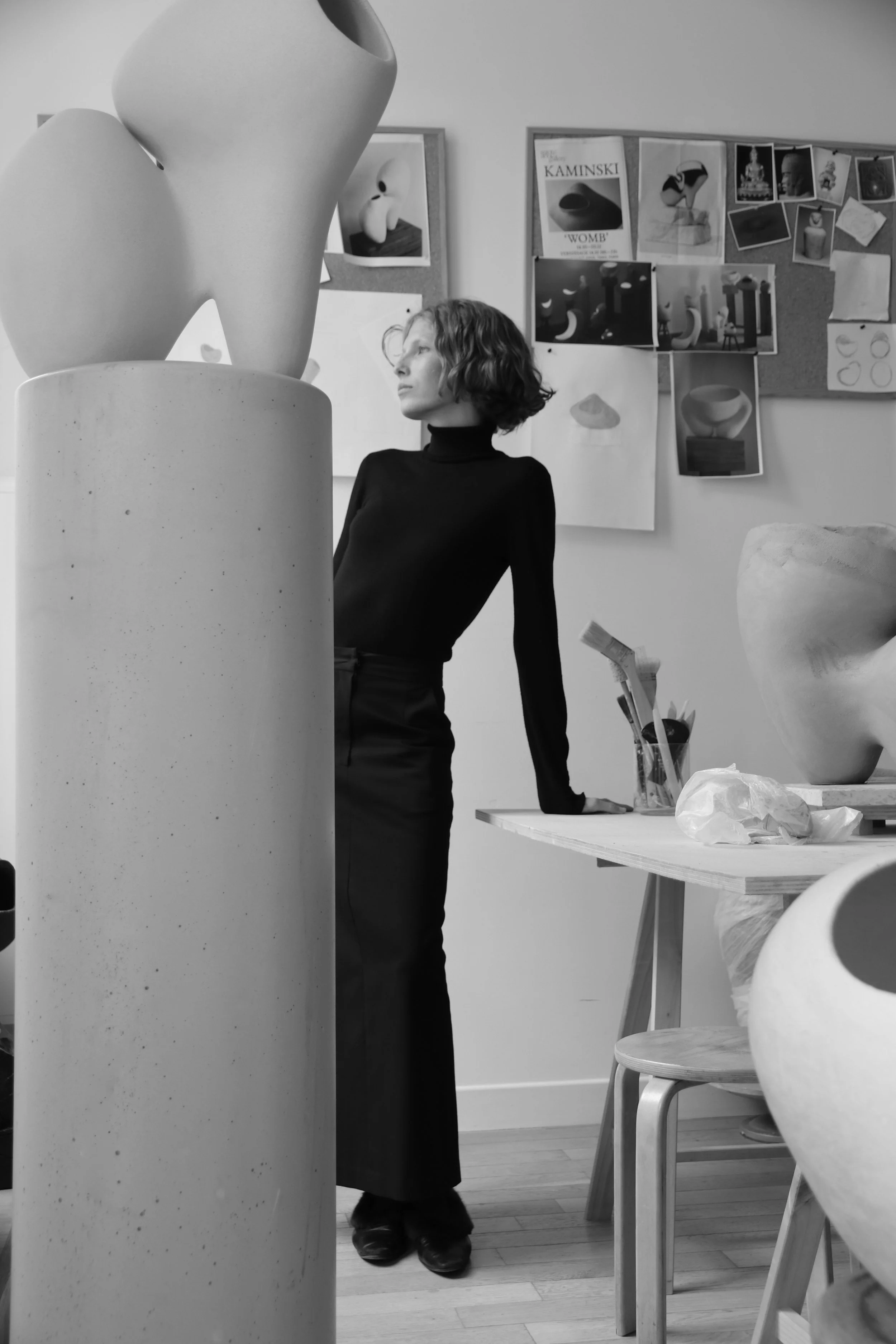
All images were taken by the artist @katharina.kaminski
Film Photographer Nigel Malone
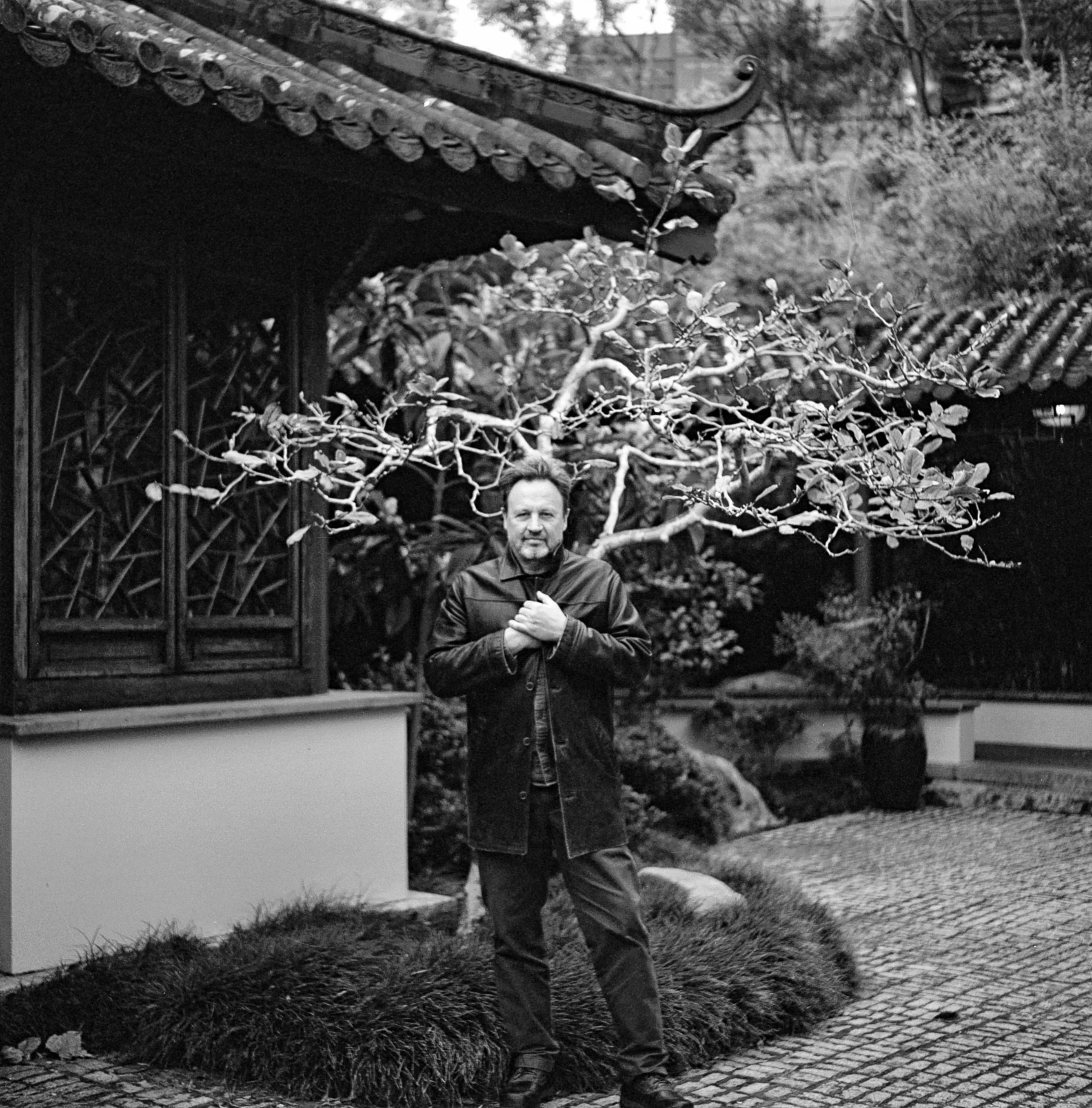
To be seen. What does it really feel like? Who’s locking eyes with who? To hold a moment in your bare hands. To envelop time and space with the blink of a lens. To be unapologetically, completely, truly, madly seen. A gentle, intentional press of the shutter takes us to a place that would be hard to believe if not for the evidence captured on film by photographer Nigel Malone. Each shot lands somewhere between here and there. That place within ourselves we never really see, until someone cares deeply enough to take a closer look inside.
What does it feel like when you press the shutter button?
I shoot film, so every shutter press is precious. You have to wind on after every frame before you can take another one, and periodically reload. All of that means there’s a lot of downtime where you might miss a shot. So you must make every shutter press count.Pressing the shutter is therefore a matter of resources and timing. A little like clay pigeon shooting, where you only get two shots and need to swing the barrel ahead of the target. It’s about getting the anticipation perfectly right, first time. Pressing the shutter also signals a cognitive shift from left-brain, technical aspects of shutter speed and aperture settings to right-brain, storytelling and feeling. Much like handing in an exam, with every shutter press and roll of film shot comes an anxious wait for the film to be processed and proofed, before you know whether you hit your target or not.
Do you have a mantra you go to when seeking direction or inspiration?
It’s hard to say definitively. I have a mantra that I’ve lived my creative life around - “Act like the herd, end up as steak” - which in essence means if you do what everyone else does, you’re likely to be eaten alive. But in photography, almost everything has been done before, so it’s challenging to find a completely new approach. I like finding new combinations of classical elements. It’s part of the reason why I’ve gone back to analog when everyone else is digital or AI - it’s one way of breaking away from the herd.
Tell me the story behind this photo
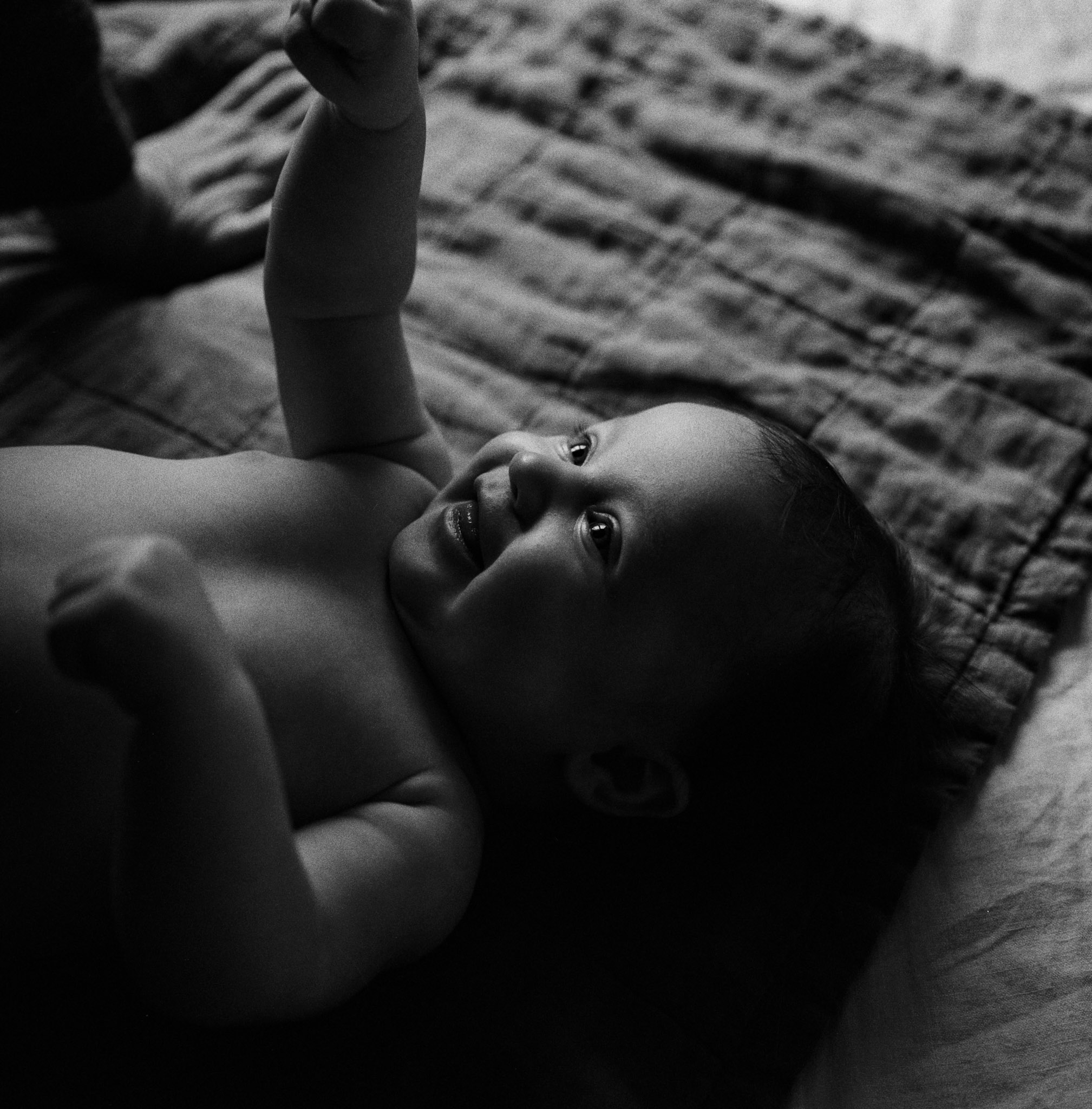
For much of my life, I thought that I would be at the end of the genetic line - I never really considered having children. Not because I didn’t like children, but mostly because I didn’t like parents. But also a concern for the world of which they would inherit. At about the same time I reconciled my relationship with my father, I met Lucy. The broken line started to form from the past - and into the future with the birth of Winnie. I’ve lost count of the experiences I wouldn't swap for anything in the world as a result of becoming a father and a parent. This photo is one of them.
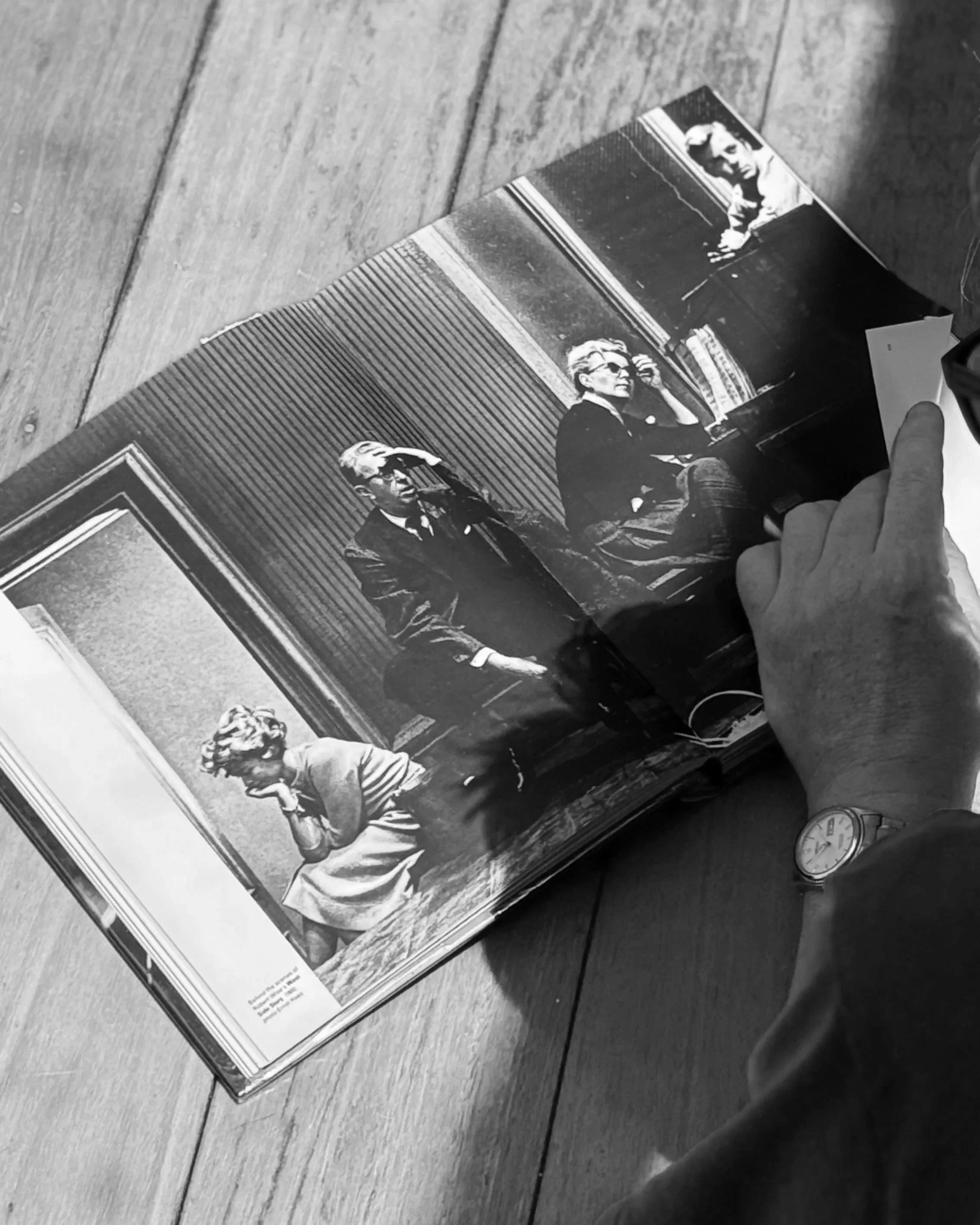
Photograph by Ernst Hass
When capturing a face what are you looking for?
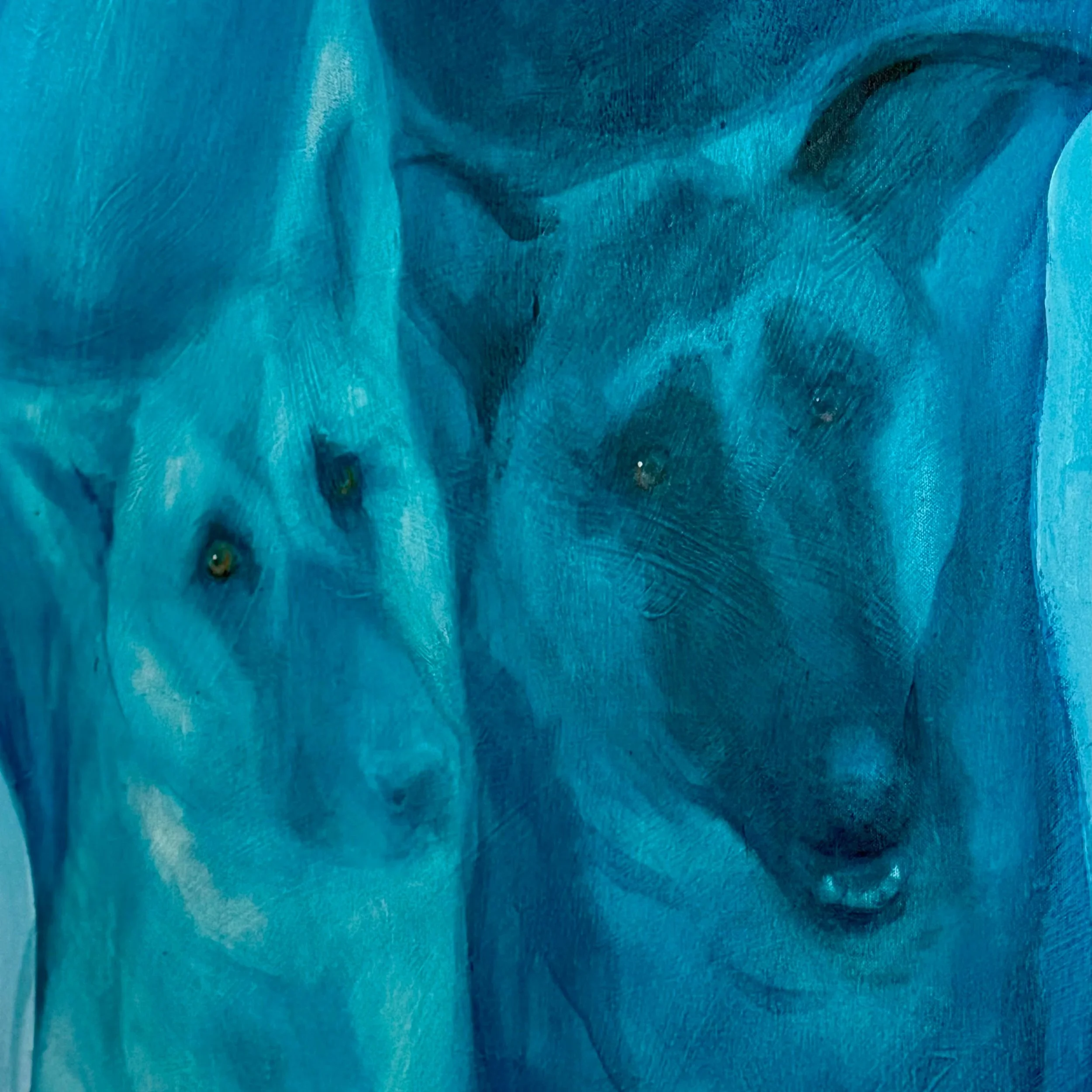
A friend of mine painted a large portrait of two of my dogs that have since passed. It’s quite surreal, like something from Picasso’s blue period. The outstanding feature of what is a huge painting are the tiny dots of white paint, the catchlight in their eyes, which is so powerful and revealing of their character. So for me, it is always about the eyes. Eyes can say everything or nothing, and as a portrait photographer, it’s your job to create a mood that encourages them to reveal something rarely seen.
Are there any parts of shooting on film that make you nervous?
All of it. The technical aspects, ensuring a perfect negative full of information from shadows to highlights. To engage with another human, the subject, to build an understanding, an openness that allows authenticity and character to exude in a form that we both find surprising.
Is there anything or anyone you have lost that you wish you had photographed?
I’ve lost the opportunity to photograph my mother and father in their youth. They are still alive, but it’s only in later years that I’ve come to fully understand how they have shaped my life in so many positive ways - how much of them I am. Even more so, now that I have become a father. But I was selfish when I was younger; I saw value in photographing other things - mistakenly.
When your daughter is old enough to ask you why you take photos, how will you explain it to her?
I’ve always been fascinated with science, particularly climate, glaciers and mountains. I liken taking photos to the climate scientists who venture into the Arctic to drill and extract ice cores to see how our climate has changed over the years. My pictures work like core samples. Each one drills down into a moment - one night, one person. On its own, it doesn’t tell you much, but as they accumulate over the years, you can see the patterns, the changes in a community, an individual, or a culture.
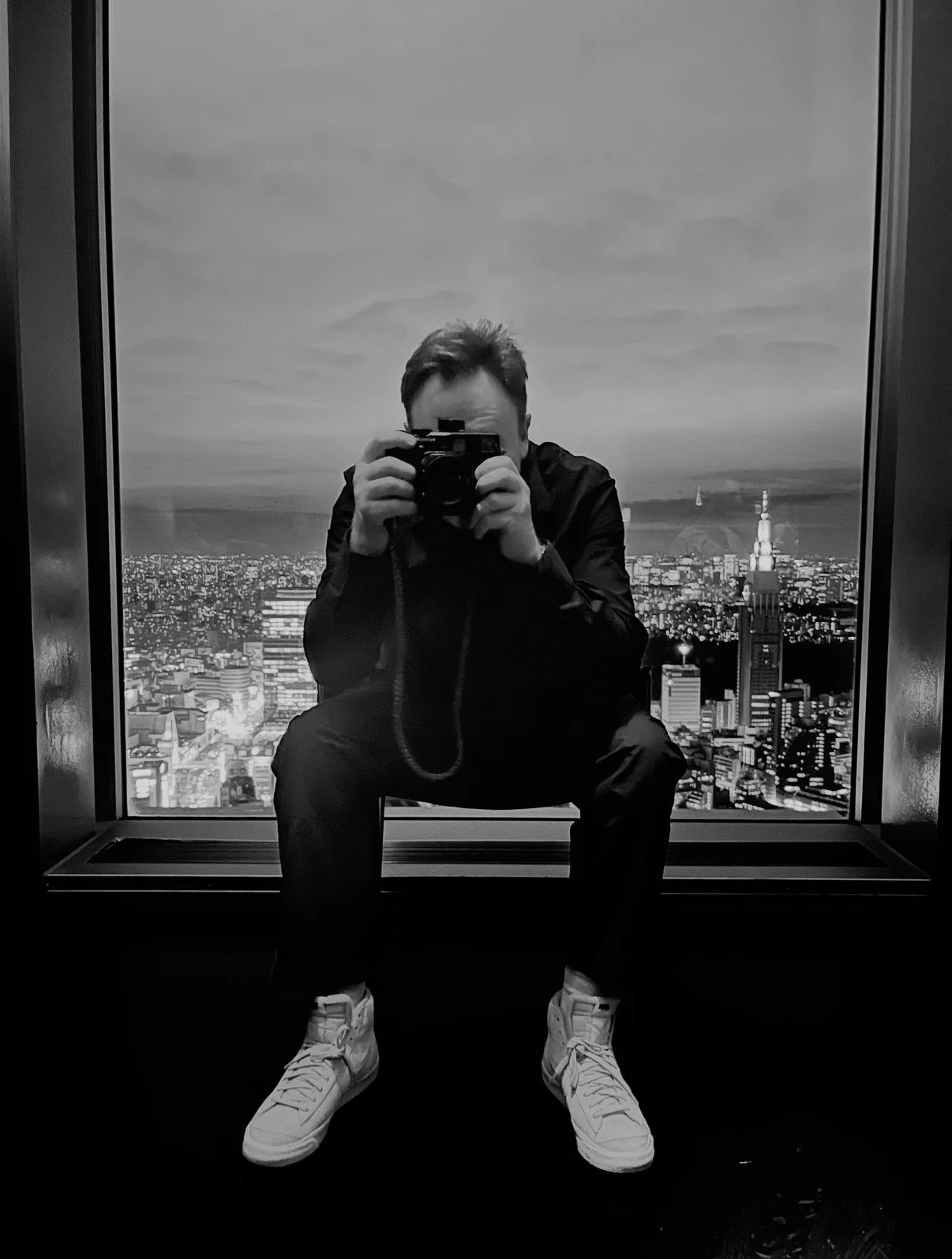
All images are the artists own @5point6_pictures
Singer songwriter Luke Hemmings for Lovewant Magazine Issue 34
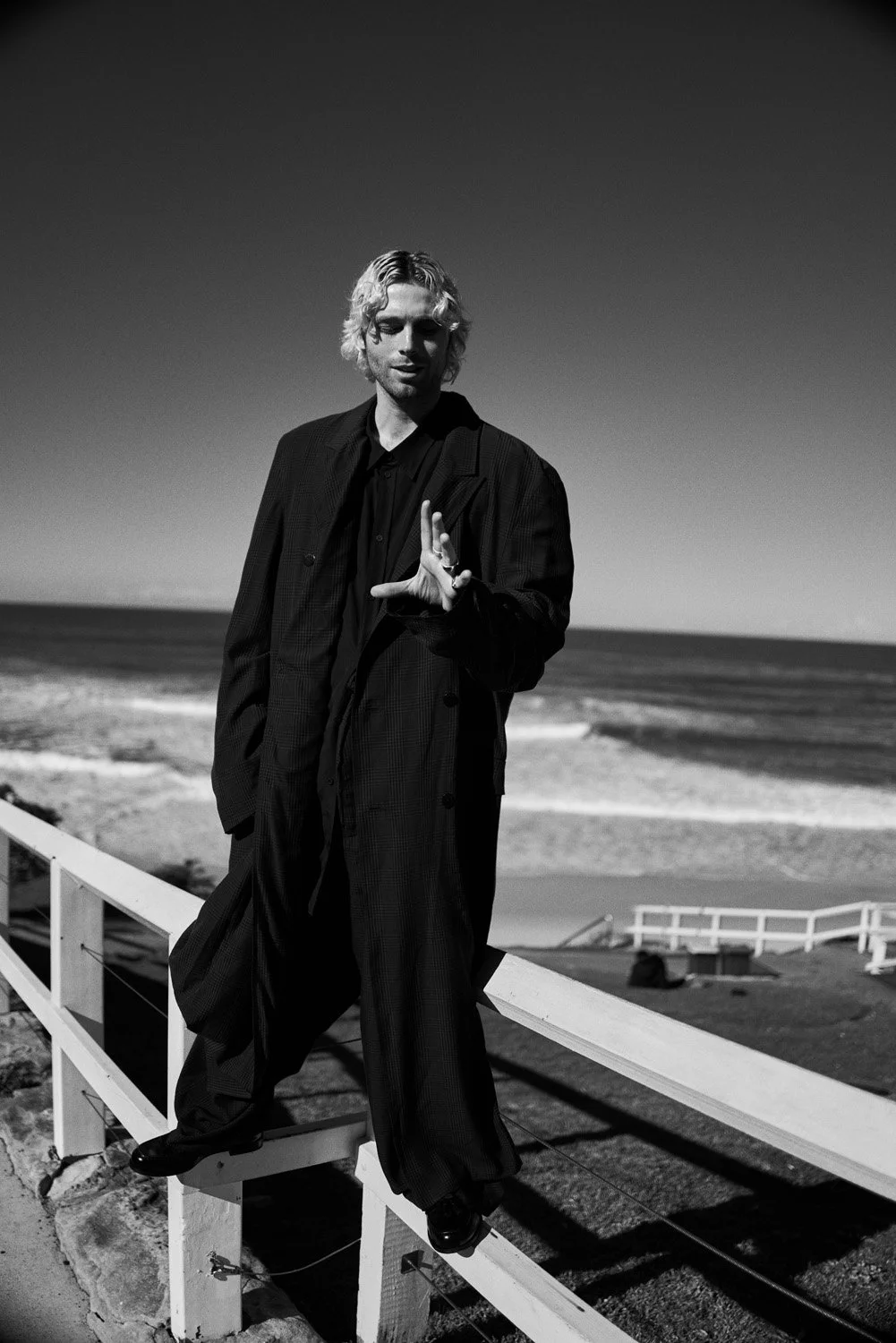
There is a space between The Boy and the ether where Luke Hemmings has found solace. Anxieties are met with a gentle understanding. Fears are faced with passion. Poetry and dreaming are the chosen languages. And there is pure magic found amidst the madness. This is the birthplace of his latest solo album. Boy.
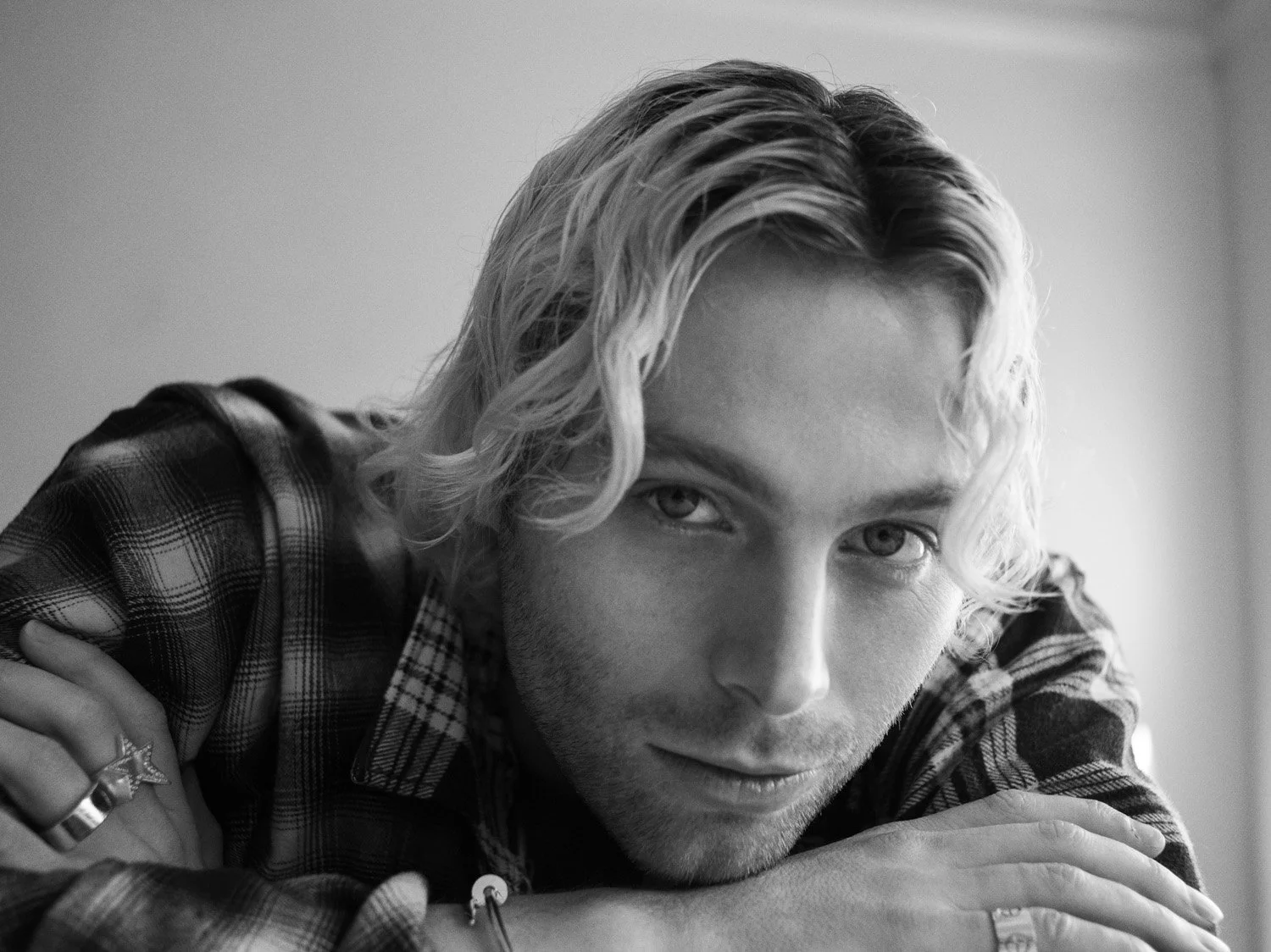
You write a lot about time. How do you manage to slow it down?
The older you get, you find peace and healing returning to more childlike things. As a creative, it's important to find time to do nothing. It’s a privilege to be bored. I do nothing and think I don’t know how to write songs anymore. Then they’ll slowly start to creep in and consume my life again.
Do you think you'd allow your younger self to have social media?
If I could go back and balance the boundaries of sharing music and art while protecting my personal life, that's how I’d do it. I’d keep my kids off social media as long as possible. I wouldn't want my younger self to have it and allow strangers opinions to be in my hands at all times.
Close my eyes was the first song you started, and the last one you finished on this album. Was that a full circle moment?
Definitely. Especially because the first album was in COVID, I was fearful it was a fluke or just a product of the time, and I wouldn't write anything I loved as much. So finishing with this song was a massive hurdle. It was the first thing that kicked off the lyrical tone. Going through your late 20s, everything is starting to get real around you. Now I can't imagine the EP album without it.
‘Nostalgia for a time that never existed’ is the title of your tour. The word for that is anemoia, What is that feeling?
A lot of the songs were written when my life was not still. I was constantly surrounded by people in motion. Touring is amazing but it can be quite lonely. You're in this odd state where you’re feeling every emotion. It almost feels like a dream. I wanted my show to feel like that. I’m talking about very personal things to me, but they're inevitably things that are so universal, it feels like we have such similar experiences as humans.
In your song ‘Garden Life’ you sing ‘I am alcohol swimming through your system’. Have you always felt things on such a visceral level?
That's my favourite song and one of my favourite lyrics. I’ve always felt things on a tangible level. Growing up, I found myself bottling up emotions and ignoring them. Believing they would just go away on their own. These days I know better, I tend to face things head on. Writing is one of the best ways to express how I feel.
If you were a young boy growing up today, what would you be most afraid of?
How uncertain the future feels. During a time that feels like theres constant negative news, maybe I’d be less of a dreamer. But I’d like to believe I’d pursue music no matter what.
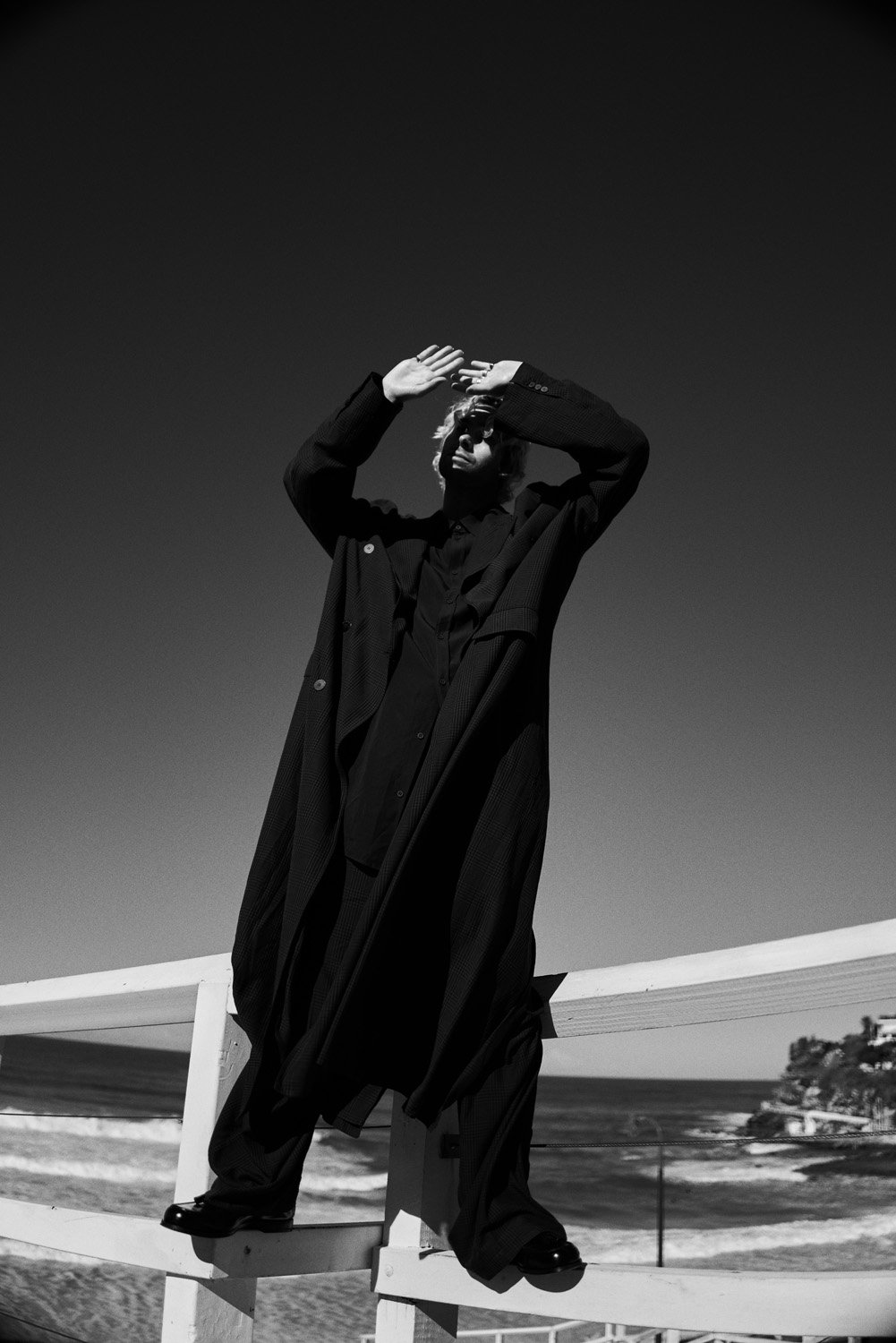
You also ask ‘What comes after me?’ What is your aftermath?
It’s less about what I achieved in my career. It's the way my loved ones think about me, the family I build and what they'll think of me when I'm gone. It’s the impression that you leave.
Photography by Bec Parsons @bec_parsons @lukehemmings
Sculptor & Designer Tom Butterworth
When the message you’ve been waiting for arrives, do you hold onto it or set it free? Perhaps you have been longing for the wind to change direction so you can face it head on. Or the tides to roll out a little further for your feet to walk the line. For sculptor and designer Tom Butterworth, every gesture from the universe becomes an exhale. A personal call from Mother Nature to create, and let go.
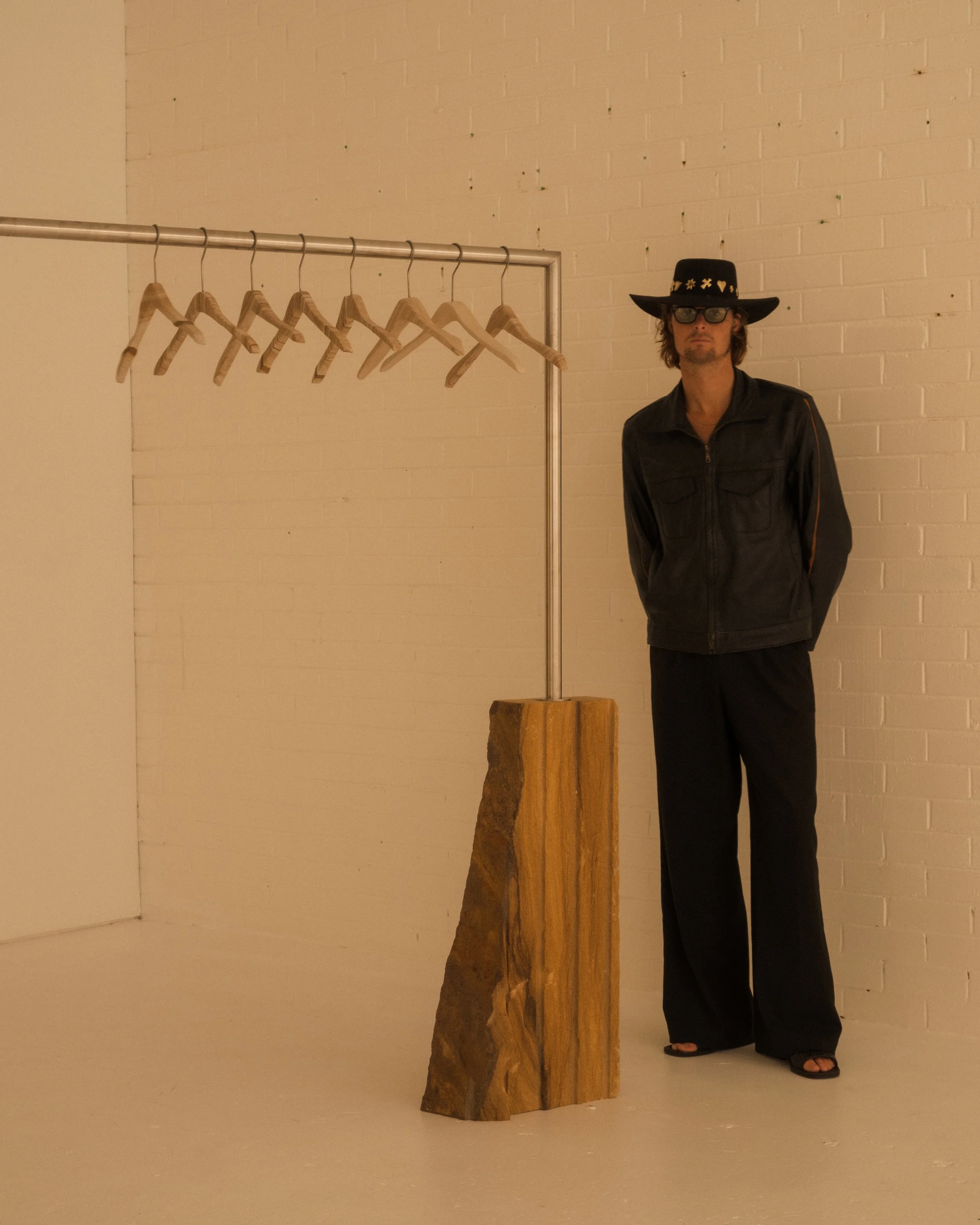
What feeling are you seeking when choosing a piece of stone to work with?
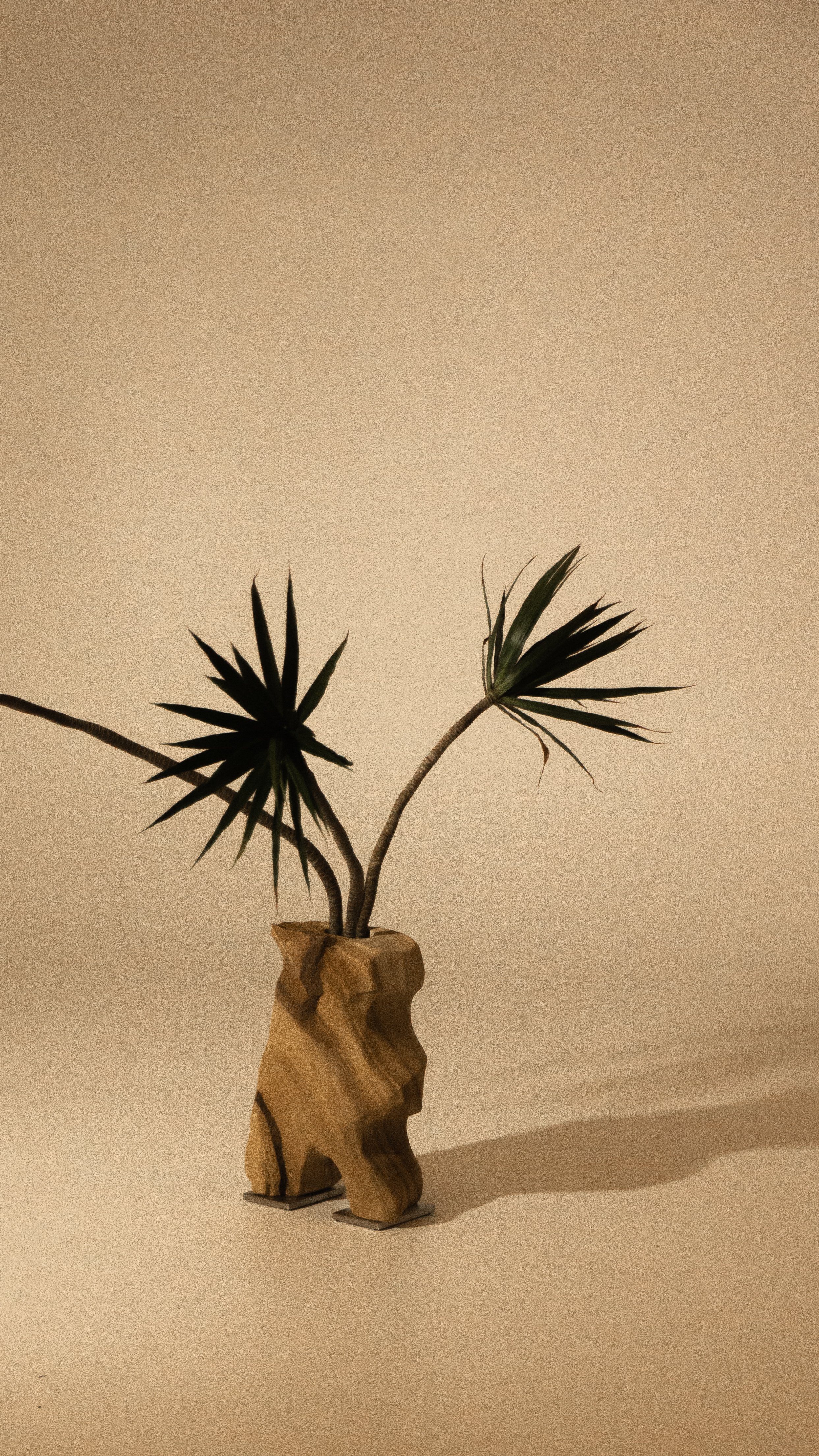
I tend to look for geological features that stand out to me. Known as ‘bands’ or more formally ‘Liesegang bands', which are colorful, concentric patterns formed by chemical precipitation. That’s the beauty of sandstone, the colour is already there, created by the mother, no chemicals mixed together, it’s already embedded in the stone, it’s my job to unveil it’s beauty.
How do you create softness and light from elements usually known for their robust nature?
That’s never entered my mind, which is now cool to think about... Maybe I’ve always seen sandstone as a material with immense flow, softness and lightness...the way the bands move through the stone, it doesn’t feel as if it’s robust, more femme if anything.
Can you tell me how growing up by the ocean shapes your ideas?
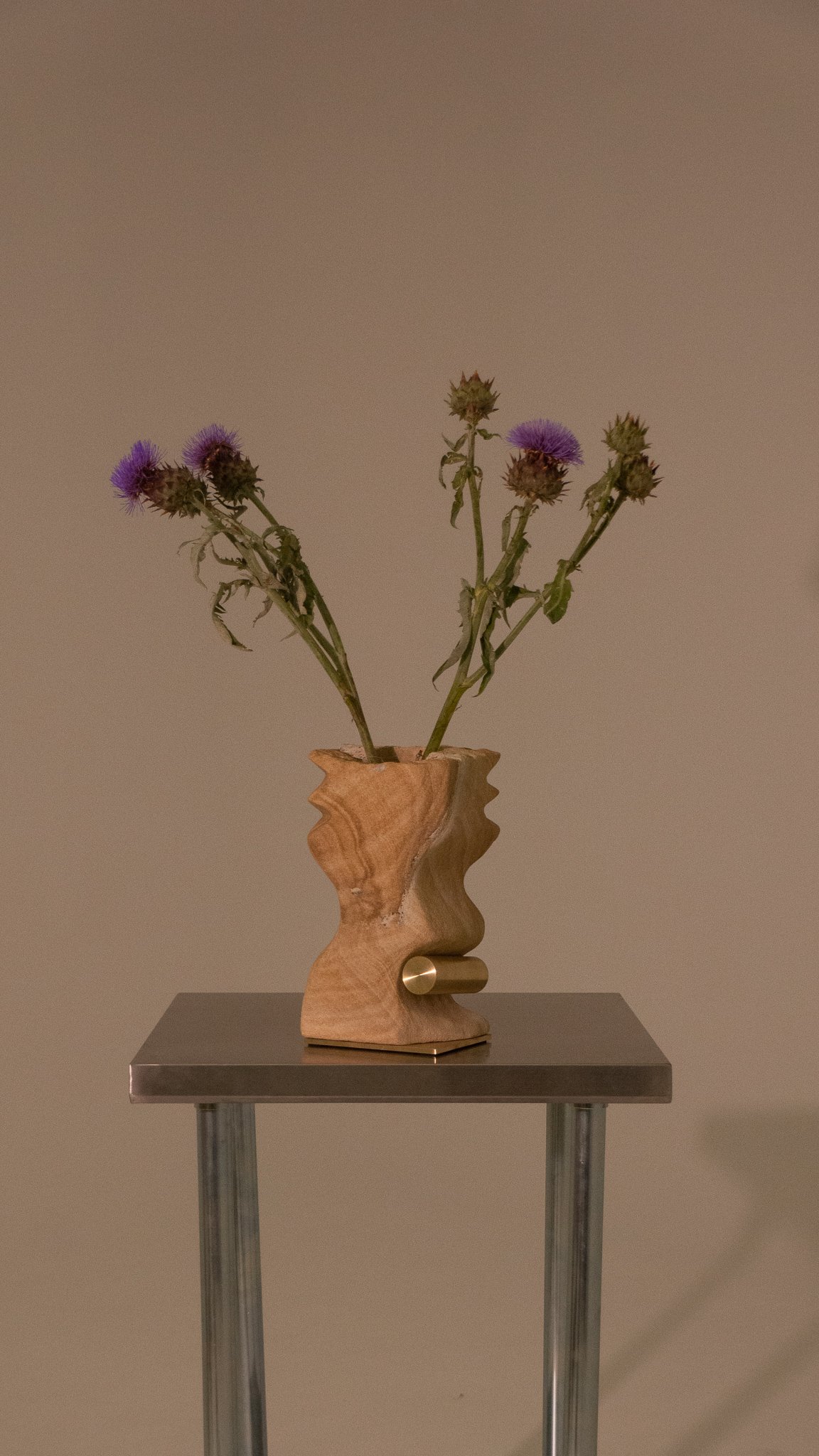
It doesn't shape my ideas, but it’s definitely a big part of my practice, growing up amongst the beautiful sandstone headlands of Sydney whilst surfing or fishing is where my love for nature began.
Your connection and understanding of nature runs deep throughout your practice. What do you wish others could understand about the power and fragility of Mother Nature?
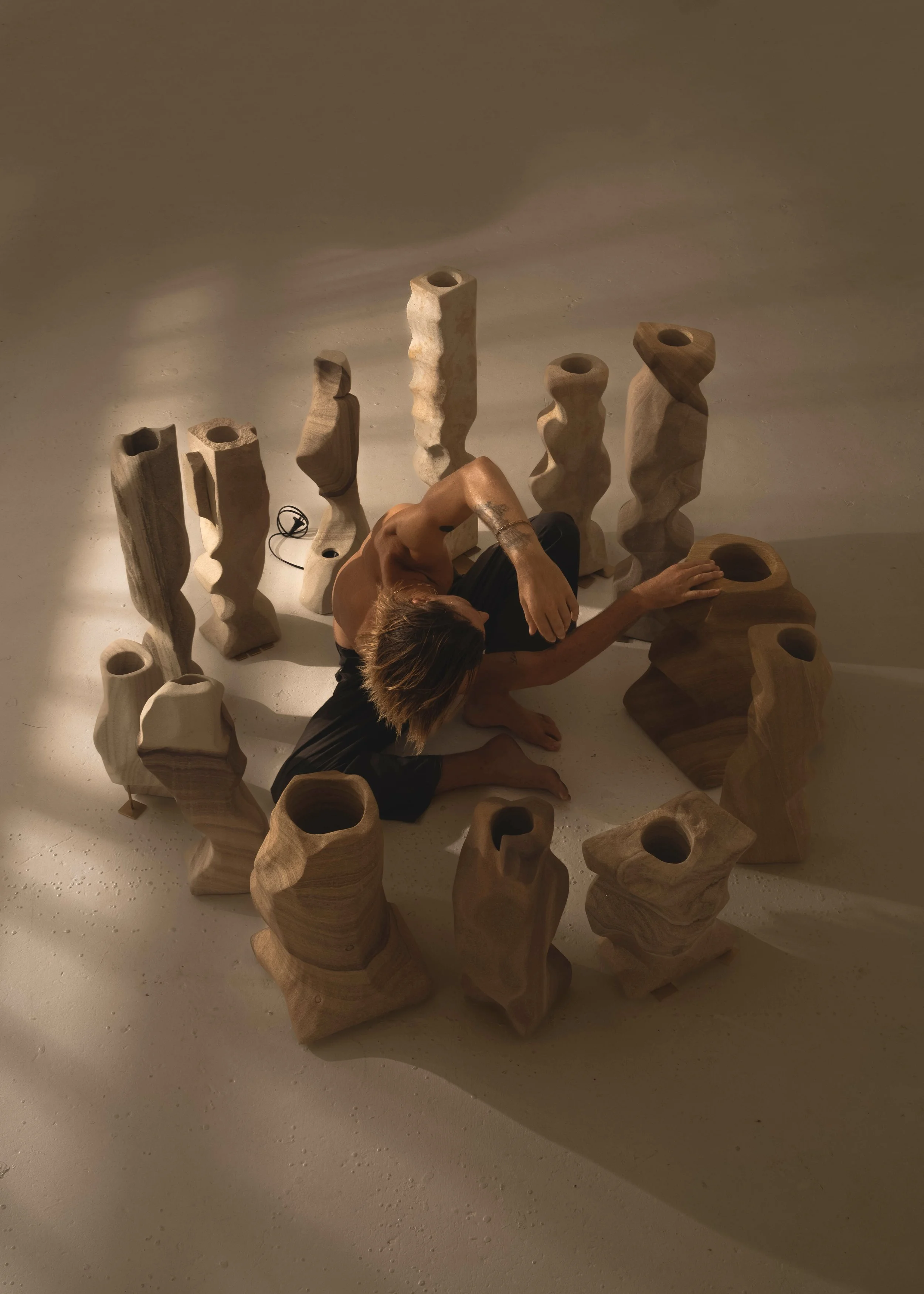
I just wish everyone spent more time in nature, then they’d be less inclined to ruin it... cause they’d realise just how beautiful it is and the feeling you can gain from surrounding yourself amongst her elements.
Fashion and design are an integral part of your work. How do the clothes you wear influence the way you approach your art?
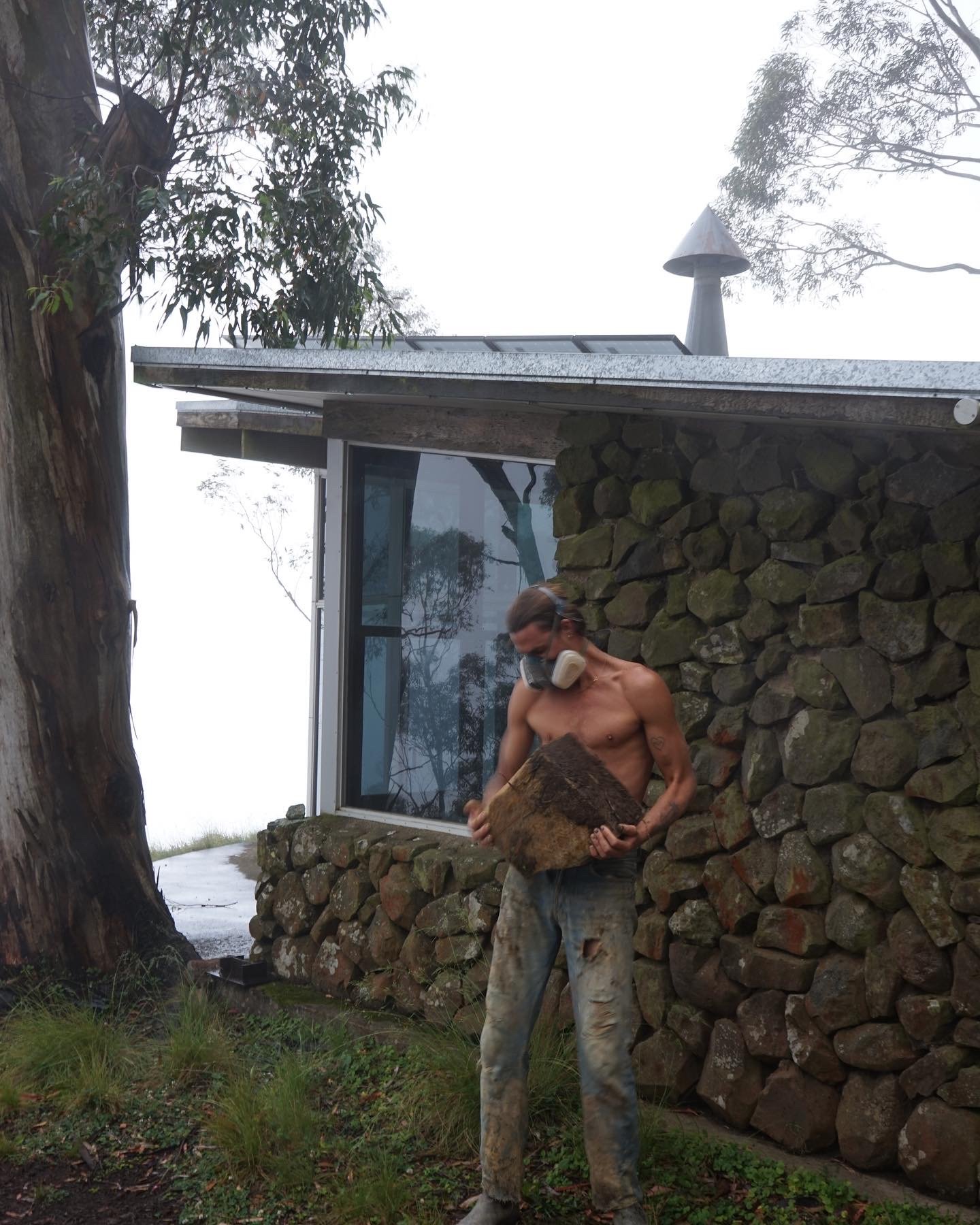
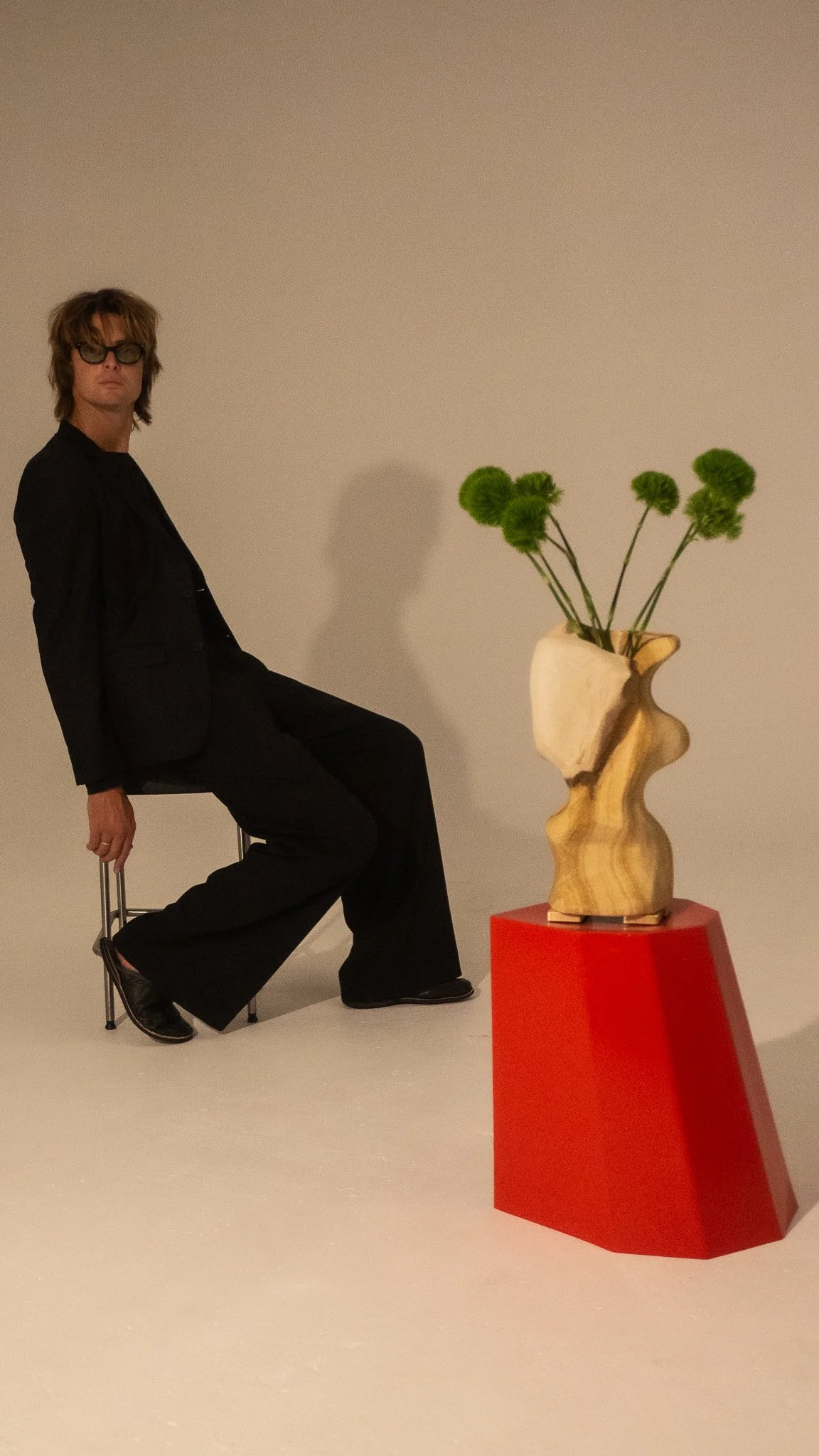
It’s so nice to be at a stage in life where I 99% no longer think about what others could have to say about what I wear, growing up in a very masculine environment, I would constantly head back into my shell regarding fashion, dressing for other people or the environment I was in rather than for myself. It’s so fucking cliche, but when I’m 103 years old I don’t want to think about why I shy’d away from being who I truly am. I absolutely love fashion, it honestly lights me up, it’s such a fun part of my day, I don't spend longer than a few minutes putting my outfit on, it happens so naturally, but I leave the house comfortable and excited to create! I have the same outlook when I’m in the studio, create for me and if the world likes it great!
What part of your practice ignites you the most?
Letting out what has been sent to me... my whole practice is just one big exhale, letting out everything the universe has sent to me.
Have you ever let go of a sculpture you wish you kept for yourself?
Never, create and let go, create and let go, you create it, to let it go, then new ideas can come in...forever flowing.
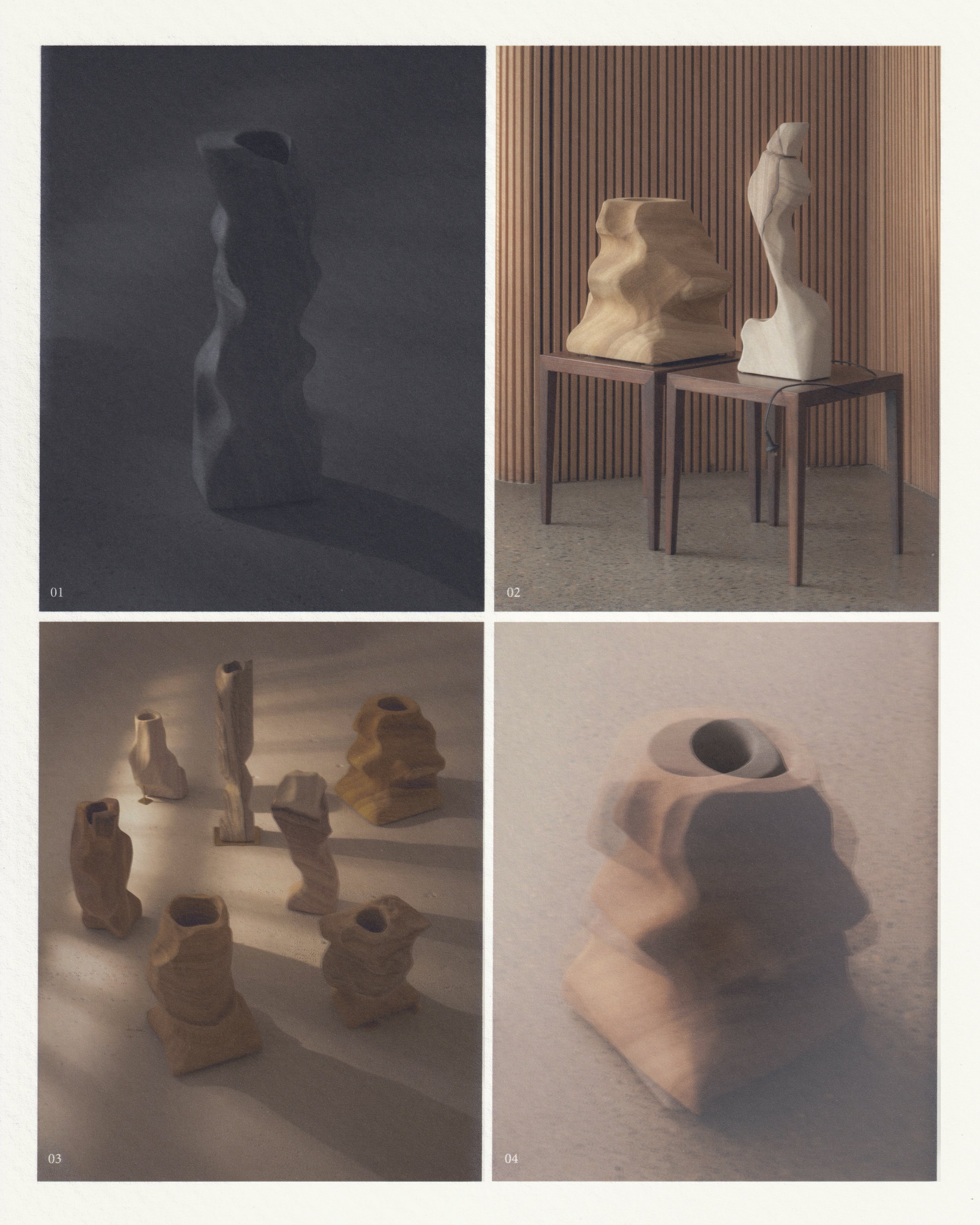
You mainly work with upcycled sandstone, some that has been on earth for millions of years. As you craft new life into each piece, what stories do you hope they carry on?
I truly just want to immerse the exterior into my clients space and with that have their space come to life and integrate the beautiful grounding feeling that these pieces offer. The opportunity to have nature as part of your home through art and design rather than mass produced pop outs from offshore companies....it’s such an easy one for me, and it’s such a nice feeling when my clients feel the same experience when one of my pieces are installed.
What parts of yourself have you confronted through your craft?
Being even more patient than ever. Making sure what I’m delivering to a client is at a point which I’m extremely happy with. I used to be bullish through my early 20’s, just keen to finish, now I’ve settled into a state of patience and my pieces are at a new level as a result.
Do you have a song or mantra you can rely on to shift your energy?
“I love this life, I am so grateful” First thing I say when I wake up, last thing I say before falling asleep. Gratitude is massive
Artists Melanie & Stephanie Hausberger
When the sky and ocean meet, they embrace like old friends. A body of water. A body of light. Each harnessing truth. Power. And beauty. Two as one. One as two. A moment born from a surrender to the sun. When the sky and ocean meet it is without need for control. There is no place for ego when you are shaped by the horizon. There is harmony in the heartbeat. An alignment between the blues. For artist sisters Melanie and Stephanie Hausberger, one is navy. The other is smalt blue. A palette created in utero, together.
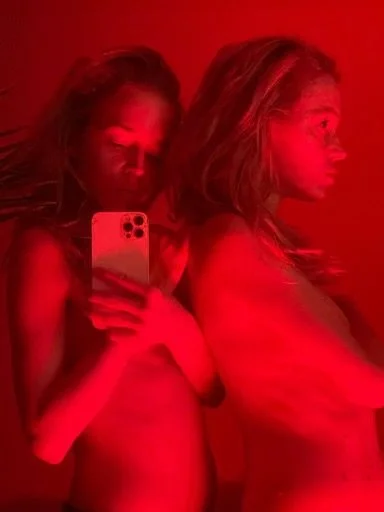
When taking photos of one another, what are you looking for?
Capturing a certain feeling.

If you could describe one another as a colour, what would it be and why?
Stephanie is navy, just classic. Melanie is smalt blue, sky and ocean.
Words seem near impossible to describe how it feels when you create together. So instead, can you tell me what it sounds like? Do you talk to each other?
Yes we talk. A lot actually. Sometimes music or podcasts too.
The female body is a subject you have been exploring since a very young age. Looking back to when you first started drawing, do you think your fascination began consciously or subconsciously?
Definitely unconscious.
New York and the Tyrolean Alps are strikingly different places to live. How does this shift in energy influence your work and your view on the world?
Coming from the alps in a way made us more curious about culture and the world generally. Both have completely different energies. We like to be inspired by both and are very lucky call both places home.
When working on a piece together, how do you release control to allow the other into the canvas?
We both don’t feel the desire to control anything when working on a piece together, actually it’s the opposite.
Your lives began in utero together, what differences do you find yourselves individually drawn to?
Stephanie loves to plan, Melanie tends to avoid planning.
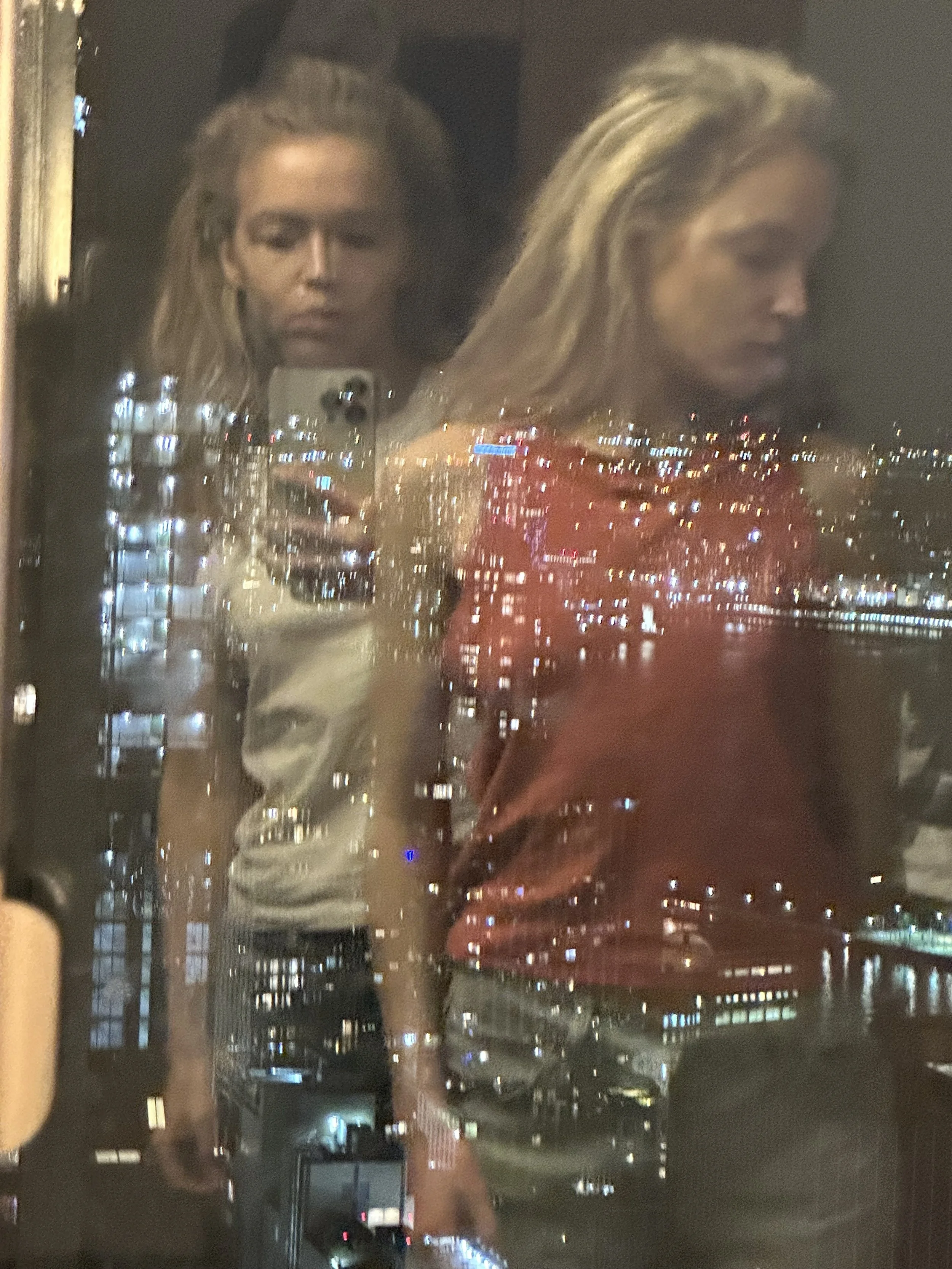
Who are the women you are influenced by and why?
Probably our mum the most. Her energy, her passion for certain things. And our grandmother, her perspective on things, her style.
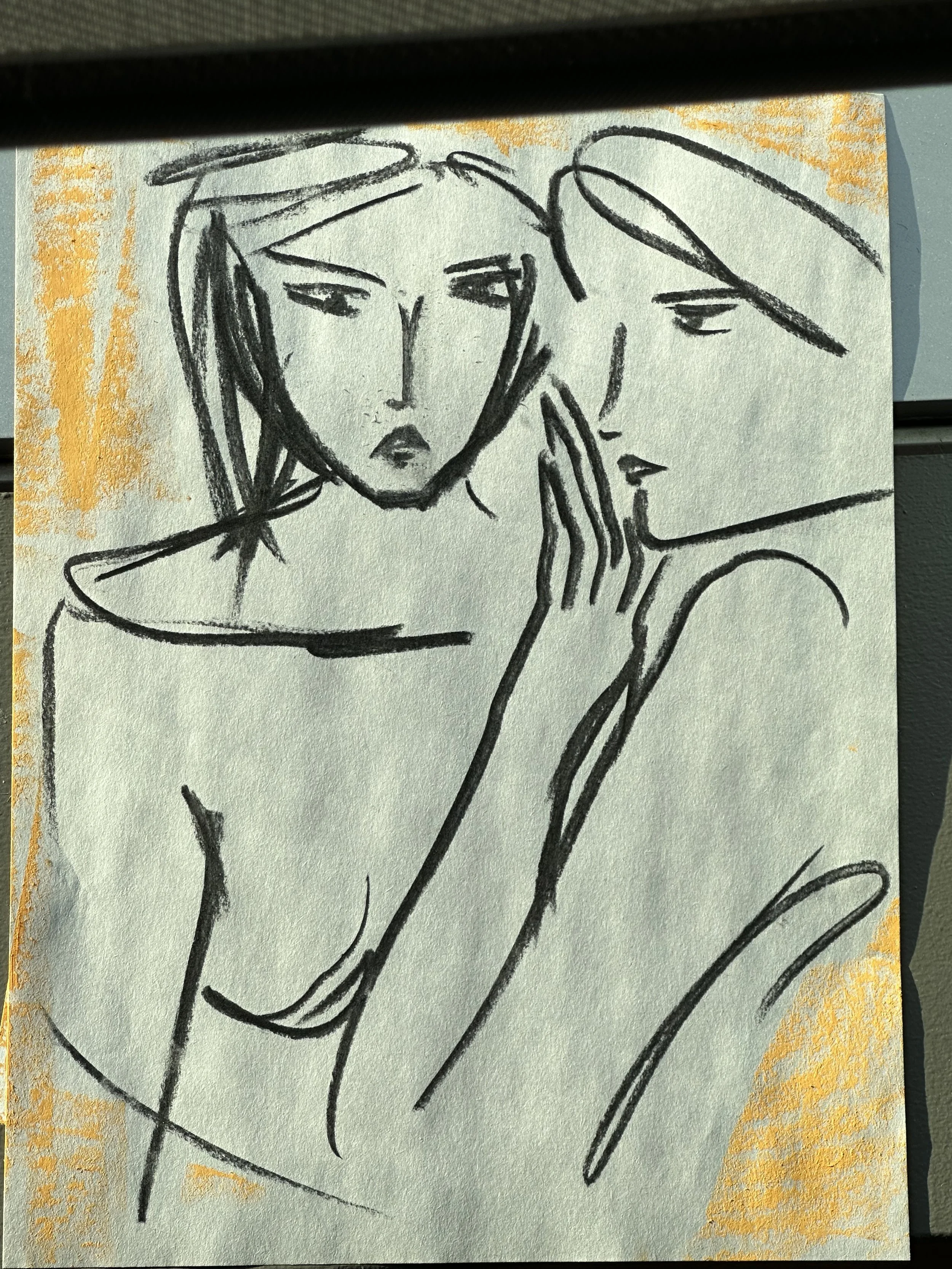
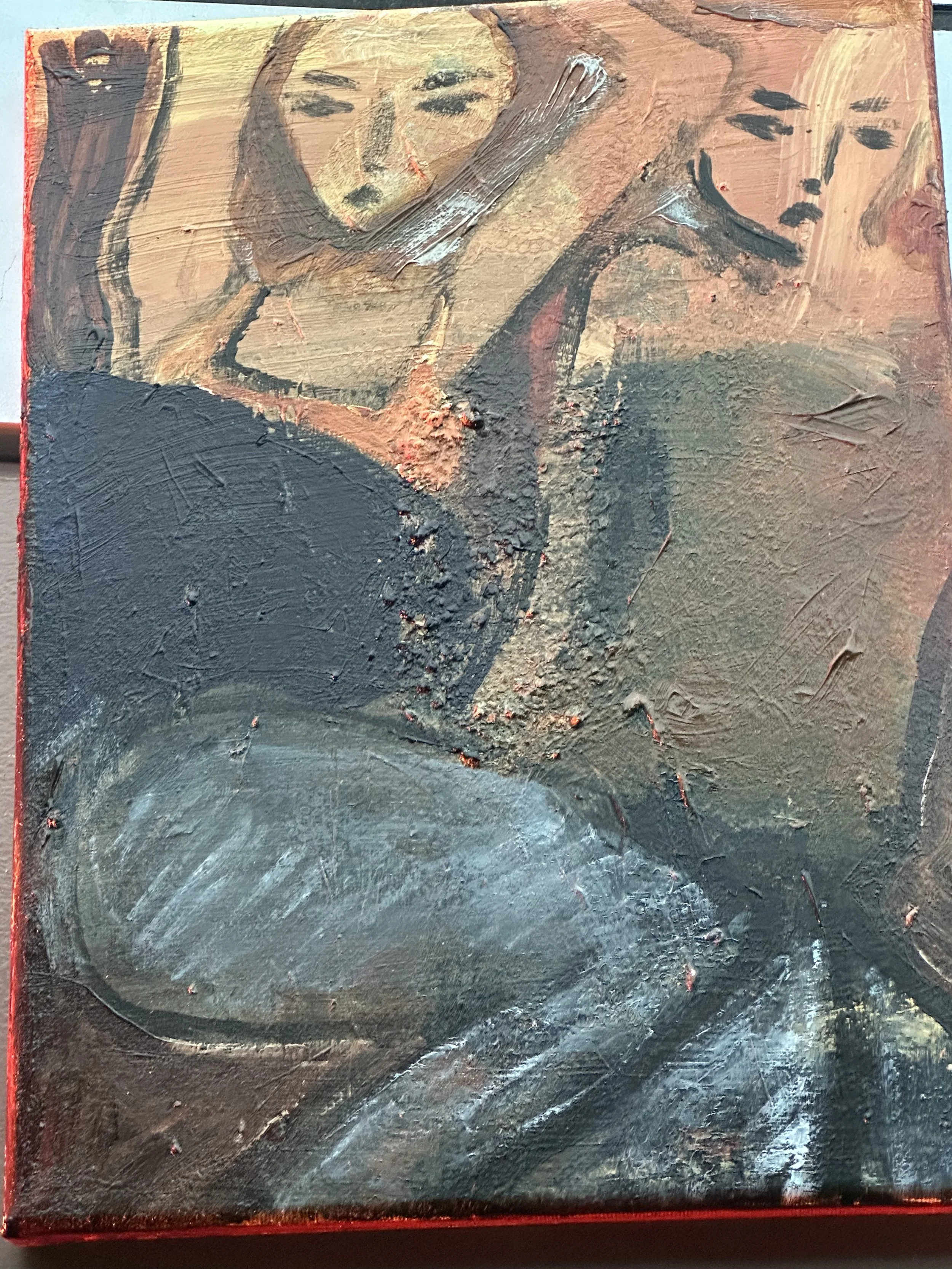
What parts of yourself do you see in one another that you like?
We both probably see more the parts we don’t like in each other and frankly, many of them are the same. One is unnecessary talking.